

Introduction
The tragedy of Ashura in 61 AH (680 CE) stands as an unparalleled symbol of resistance against oppression and tyranny. Yet, after the martyrdom of Imam Hossein (AS) and his companions, the Umayyad tyrants sought to erase this movement from the pages of history. Their aim was to ensure that this defining event would fade from collective memory. However, the prophetic household, through calculated and divinely guided actions, not only prevented the forgetfulness of Ashura but also transformed it into a living, dynamic force. In this endeavor, the day of Arbaeen plays a pivotal role. It marks the first spark of resistance after Karbala, the moment when the powerful medium of Ashura was activated against the dark dominion of the Umayyads, and the beginning of a spiritual magnetism that continues to draw millions of hearts toward Karbala to this day. More than just a commemoration, Arbaeen represents the storm of clarification, a powerful movement of explanation and exposure that shattered the darkness of tyranny and ensured the message of Ashura would never be silenced.
This article is an analytical study based on the statements of Ayatollah Seyyed Ali Khamenei delivered between 1989 and 2021 regarding the historical, political, and spiritual dimensions of Arbaeen. Through thematic classification of these speeches, the paper aims to present a comprehensive portrait of Arbaeen’s place within the school of Imam Hossein.
1. Preserving the Memory of Ashura
Following the event of Karbala, the enemy sought to erase it from memory. But Lady Zaynab al-Kubra (SA) thwarted this conspiracy through two decisive actions:
The first was her captivity in Kufa and Damascus, where through clear and exposing speeches, especially in the courts of Ibn Ziyad and Yazid, she unveiled the true face of the oppressors and revealed the truth. The second was her return to Karbala on the day of Arbaeen—both the first and subsequent Arbaeens. This act carried a clear message: the malicious motives of the enemy must not be allowed to erase the precious and impactful chapters of history (Speech by Ayatollah Seyyed Ali Khamenei, January 7, 2015).
2. Arbaeen: The First Surge of Resistance After Karbala
In the narrative of Karbala, Arbaeen is not an end but a beginning. After Ashura, an atmosphere of fear and oppression dominated society. Though people had come to understand many truths through the words of Lady Zaynab (SA) and Imam Sajjad (AS), and from witnessing the plight of the captives, they did not dare to express them. This oppressive silence weighed heavily on the faithful. On Arbaeen, the first eruption of resistance occurred in Karbala. For the first time, believers were able to voice what was in their hearts and take a stand against the system of tyranny and domination (Speech by Ayatollah Seyyed Ali Khamenei, February 17, 2009).
3. Establishing the Eternity of the Hosseini Movement
The significance of Arbaeen lies in the fact that, through divine guidance of the Prophet’s household, the memory of the Hosseini movement was made eternal. Had the survivors of the martyrs and the true heirs not committed themselves to preserving the memory and legacy of martyrdom across various events, later generations would have gained little from that sacrifice. The struggle of Lady Zaynab (SA), Imam Sajjad (AS), and other noble figures in this path was as difficult as the sacrifice of Imam Hossein (AS) and his companions on Ashura. The great lesson of Arbaeen is that we must keep the truth and the memory of martyrdom alive against the storm of enemy propaganda (Speech by Ayatollah Seyyed Ali Khamenei, September 20, 1989).
4. Arbaeen: The Powerful Medium of Ashura
The importance of the first Arbaeen was that it became a powerful medium for Ashura. The forty days between Ashura and Arbaeen marked forty days of the rule of truth over the darkness of Umayyad and Sufyanid authority. The exposing cries of Lady Zaynab (SA) and Imam Sajjad (AS) in Kufa and Damascus, amidst that absolute darkness, constituted the greatest media campaign of that era. These very voices preserved Ashura and brought it to us today. Through this forty-day movement, the Ahl al-Bayt (AS) stirred a storm that shook history forever, even in that suffocating environment (Speech by Ayatollah Seyyed Ali Khamenei, October 13, 2019).
In other words, this forty-day period from Ashura to Arbaeen is one of the most critical chapters in Islamic history. Ashura itself stands at the highest level of importance, and these forty days are second only to it. If Ashura represents the peak of struggle through sacrifice, then these forty days represent the peak of struggle through explanation, exposure, and clarification. This great movement—the extraordinary endurance of the Prophet’s household under the leadership of Lady Zaynab (SA) and Imam Sajjad (AS) was what made the Karbala event everlasting. Truly, this clarification completed that sacrifice; without it, the sacrifice would not have borne its ultimate fruit (Speech by Ayatollah Seyyed Ali Khamenei, September 27, 2021).
5. The Magnetic Attraction of Hossein: From Jabir to the Present Day
The magnetic attraction of Hossein, which today draws millions from across the globe to Karbala began on Arbaeen. The first manifestation of this pull was the journey of Jabir ibn Abd Allah al-Ansari, who traveled from Medina to Karbala. On the day of Arbaeen, after those bitter days and heartbreaking martyrdom, the first visitors gathered at the grave of the martyred Imam. Among them were Jabir ibn Abd Allah al-Ansari and Atiyyah ibn Sa’d al-Awfi, a companion of Imam Ali (AS).
Atiyyah narrates that before approaching the shrine, Jabir performed a ritual bath (ghusl) in the Euphrates, donned his garments, and—though blind—approached the grave of Imam Hossein (AS) with the reverence of one walking around the Kaaba. Upon touching and recognizing the grave, his emotions overflowed, and he cried out three times: “O Hossein! O Hossein! O Hossein!” (Speech by Ayatollah Seyyed Ali Khamenei, June 4, 1999). This is the same magnetism that, across centuries, remains alive in the hearts of believers and those who possess knowledge of the Ahl al-Bayt. The love and fervor for Karbala began that day and will endure forever (Speech by Ayatollah Seyyed Ali Khamenei, March 21, 2006).
6. Arbaeen: The Meeting Place of Believers in the Holy Land
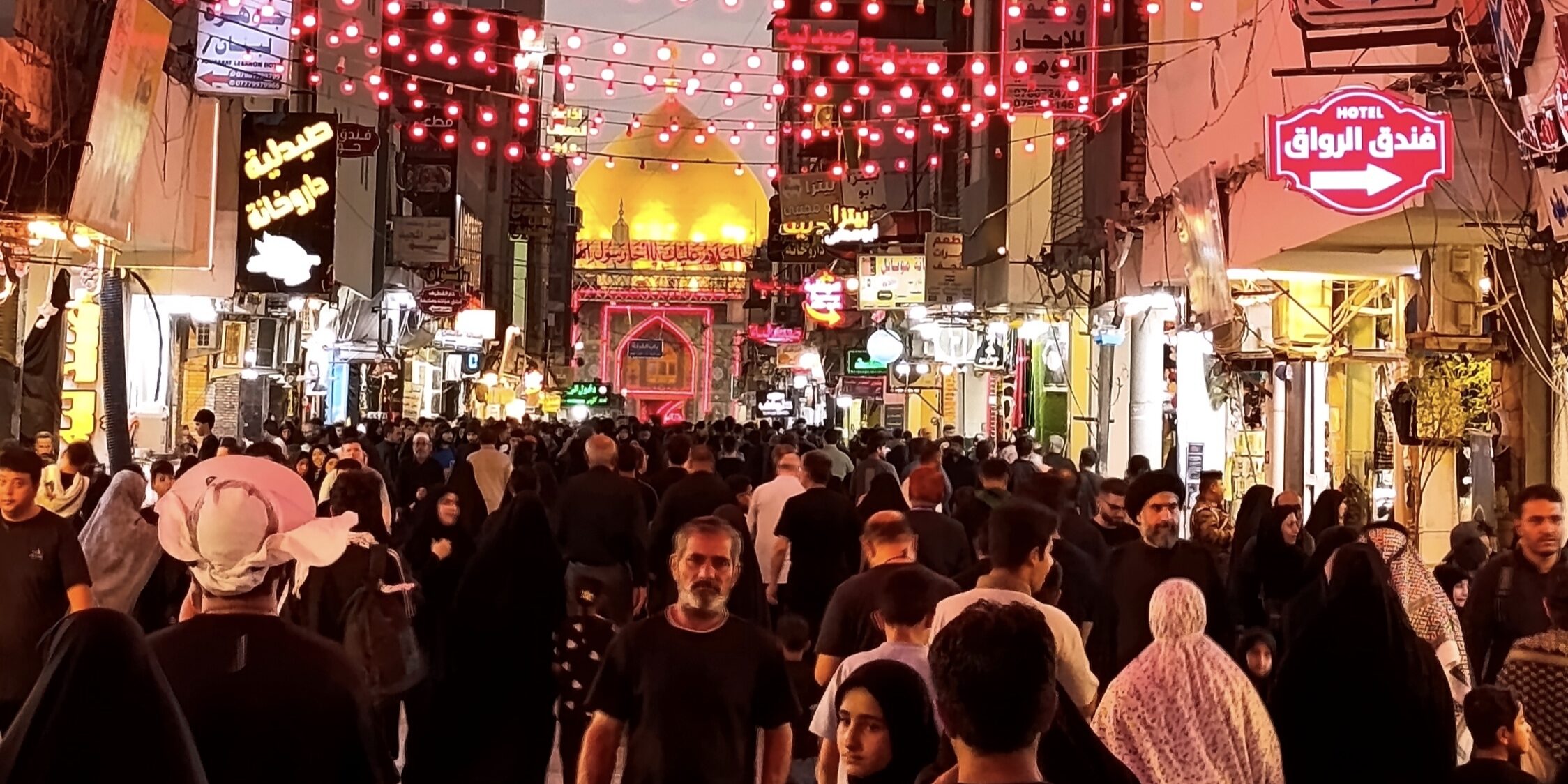
The commemoration of Ashura and its great sacrifice has always been observed on Arbaeen in that pure land. Today, the gathering of Shia Muslims in Karbala on this day is not only proper and commendable but also a continuation of the path and tradition set by the Imams of Guidance (AS). This gathering serves as a renewal of allegiance to the ideals of Hossein and an affirmation of keeping the memory of martyrdom alive against all enemies (Speech by Ayatollah Seyyed Ali Khamenei, March 21, 2006).
Conclusion
From both historical and spiritual perspectives, Arbaeen is a turning point in the Hosseini movement. Through the strategic wisdom of Lady Zaynab (SA) and Imam Sajjad (AS), this day became a lasting medium that carried the message of Ashura through the darkness of oppression to subsequent generations. Arbaeen marks the first spark of resistance after Karbala, the first rallying point of the faithful, and the beginning of a spiritual attraction that has drawn hearts toward Karbala for centuries. Its great lesson is the necessity of clarification and explanation alongside sacrifice just as the Prophet’s household, through their struggle to convey the message, completed the sacrifice of Ashura and taught us an eternal path to resist tyranny and uphold truth. Today, the grand Arbaeen procession is a continuation of that same path and a renewed pledge to ideals that will never allow the malicious intentions of enemies to erase the memory of martyrdom.