

Introduction
In the early hours of February 28, 2026, the U.S. government launched a full-scale war against Iran with a direct military strike targeting nuclear and military facilities. The Zionist network had sold this attack to the U.S. president as a quick, easy, and low-cost victory. In practice, however, it encountered unprecedented resistance from Iran’s armed forces. The war planners quickly realized that Iran’s ability to close the Strait of Hormuz would inflict irreparable damage on the global economy, especially on the United States.
As a result, the enemy was forced to revise its strategy, shifting from a full-scale military approach aimed at maximum destruction through inflation, unemployment, and infrastructure damage to economic warfare and social division. Within this new framework, the enemy’s financial leverage (blocked Iranian assets) turned into a bargaining tool to tie conditions such as adjustments to Iran’s regional policies, acceptance of strategic restrictions, and structural influence through international financial institutions to livelihood crises. This logic aims to gradually transform economic pressure into a public demand, where the pressured populace itself becomes the driver of accepting the enemy’s terms.
However, what ultimately brought the enemy to the negotiating table was not a desire for peace, but a cost-benefit calculation of the war. If the Strait of Hormuz had remained open and the enemy still controlled this strategic leverage, it would never have agreed to negotiations. But the closure of the strait and the serious threat of irreparable economic damage in the summer forced the enemy to manage its strategic defeat through negotiations and to present it as a diplomatic victory in the medium and long term.
This article is an effort to demonstrate the importance and real value of Iran’s tools, which the enemy is trying to conceal.
1. The Strait of Hormuz: A Vital Artery of the Global Economy
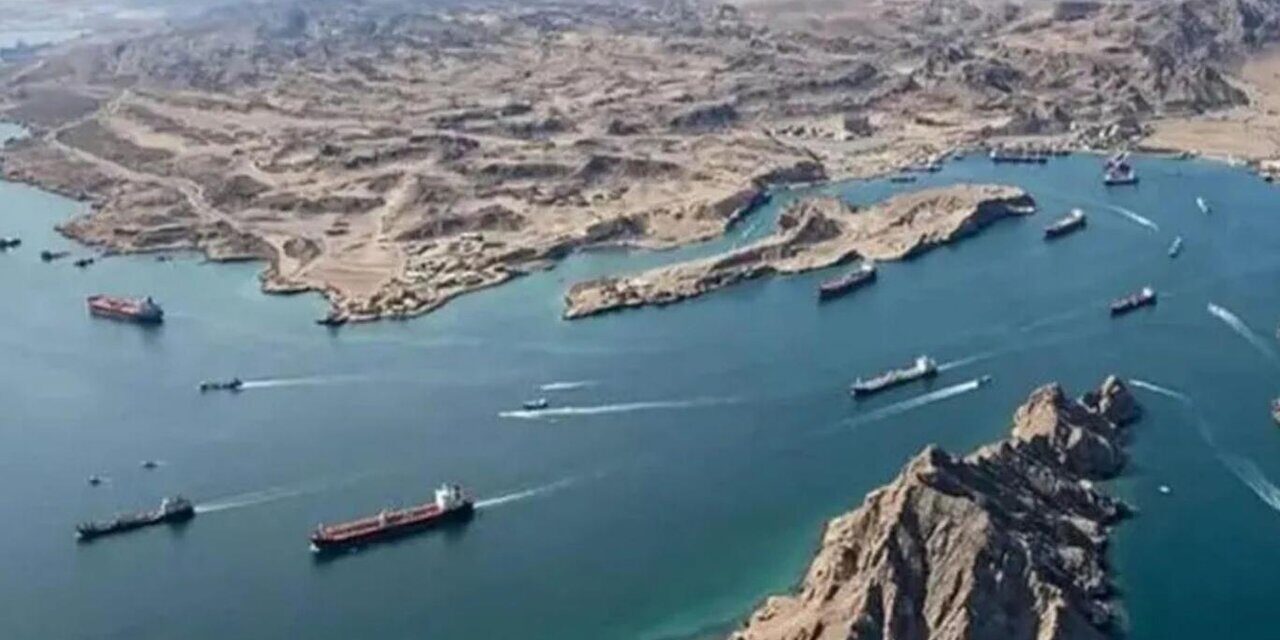
The Strait of Hormuz is the transit route for 35% of the world’s seaborne oil exports (20% of total global oil production), 30% of liquefied petroleum gas (LPG), 20% of liquefied natural gas (LNG), 25% of ammonia, 30% of urea, 55% of sulfur, 30% of the helium needed for semiconductor industries and healthcare, 20% of jet fuel, 10% of diesel, 33% of primary plastic materials, 20% of petroleum derivatives, and 10% of the world’s aluminum. Closure of this strait means higher prices for fuel, chemicals, textiles, agricultural products, electronics, and nearly all industrial goods.
However, the main impact of closing the Strait of Hormuz is not on oil and gasoline prices, but rather on the U.S. and allied financial systems, through the mechanism of rising interest rates. Prolonged closure leads to higher inflation and rising inflationary expectations. This results in higher bond yields and then higher bank interest rates. Consequently, higher borrowing costs increase credit card debt, mortgage payments, and the cost of new loans. In the United States, an average of 40% of monthly household income goes toward debt repayment. As interest rates rise, this figure climbs sharply, placing unbearable pressure on people’s livelihoods.
Evidence includes interest rate hikes by the European Central Bank its first in three years—as well as by the Bank of Japan, and a 0.5% increase in the 10-year U.S. Treasury yield from 3.9% to 4.6% at the start of the war. Inflation puts governments in a dilemma: either devalue their currency or enter an economic recession.
2. Strategic Reserves on the Verge of Collapse: The End of America’s Bluff
All energy market analysts have predicted oil prices between $150 and $250 per barrel in the event of a prolonged closure of the Strait of Hormuz. During the Ukraine war, oil prices reached $110 amid the threat of 10 million barrels per day of Russian oil leaving the market. However, with the closure of the Strait of Hormuz and the actual removal of 10 to 15 million barrels per day of oil and its derivatives from the market for four months, prices should have been much higher. Yet, average oil prices during the war remained around $95 to $100 per barrel. This low price was the result of two simultaneous U.S. operations: psychological warfare through media, and massive drawdowns from strategic reserves.
The United States used timely media reports about Iran’s surrender or an agreement to reopen the strait—along with selling oil futures at strategic moments—to convince buyers that the strait would reopen soon and prices would drop sharply. This method worked throughout the four months of war, convincing buyers to believe the false promise of reopening by the end of the current week or early next week. Simultaneously, instead of letting the market balance supply and demand, the U.S. and its allies artificially kept prices low by aggressively drawing down their strategic reserves.
But this policy is on the verge of total failure. U.S. strategic petroleum reserves have dropped from 713 million barrels of capacity to about 330 million barrels. Considering the minimum required reserves to prevent physical collapse of storage facilities (150 million barrels), only about 100 million barrels remain available for withdrawal, which at current rates will last no more than 50 days. At the largest U.S. oil terminal, reserves have reached critical levels, making further withdrawals technically problematic.
Goldman Sachs, a major backer of the war against Iran, sold $24.8 billion in oil futures contracts in just the month of June. BlackRock lost about $1 trillion in asset value during the initial financial shock of the war and came close to collapse. This Wall Street gamble is headed for certain failure as reserves run out and the timeline the U.S. had planned for the war comes to an end.
3. The Pressure Mechanism on Financial Markets: From Inflation to Stock Market Collapse
According to official data, U.S. inflation rose from 2.8% to 3.8% in the two months following the start of the war, with forecasts of 4% for May. If the strait remains closed, inflation will quickly surpass 5%. Rising inflation forces investors to pull out of fixed-income funds and pour money into commodity markets, which in turn intensifies inflation and accelerates the devaluation of the dollar.
The U.S. cannot allow a sharp dollar decline because it has sold over $23 trillion worth of dollars worldwide in exchange for goods. A dollar collapse would mean massive dollar selling across the globe and the loss of the main pillar of U.S. economic power. U.S. allies have also sold a total of over $130 trillion in debt, which would impose heavy costs on them as interest rates rise.
Cutting interest rates—the usual remedy for recession—will not work here, because inflation is driven by commodity shortages and rising energy and transport costs. Thus, the U.S. and its allies are caught in a lose-lose dilemma: either raise interest rates, causing recession and higher unemployment, or let inflation spiral out of control, which would destroy the national currency.
4. The Blow to War Profiteers’ Wealth: A $20 Trillion Stock Market Collapse
Higher interest rates deal a severe blow to the stock market and to the wealth of the wealthiest individuals. The average annual return on major U.S. company stocks is about 3.5%. When interest rates reach 5%, investors prefer bonds over stocks. This shift in investor behavior reduces the value of major stocks by 20% to 30%. The total U.S. stock market is worth about $75 trillion; a 20% decline means the loss of $20 trillion in wealth.
Wealth distribution is highly unequal: 80% of lower-income Americans hold only 20% of stocks, while the top 10% own 90% of stocks. Therefore, a market crash primarily harms the wealthy and the main policymakers behind this war. During the conflict, before Trump reassured the markets, stock indices had already lost up to $3 trillion.
At the same time, the U.S. government, with $40 trillion in debt and an annual deficit of $1.8 trillion, faces rising interest rates. Every 1% increase in interest rates adds $400 billion to the annual interest cost of government debt. At a 5% interest rate, the annual interest cost reaches $2 trillion, while total government revenue is about $5 trillion. This means 40% of government revenue goes to debt interest payments, putting the $1 trillion military budget and other essential expenditures at serious risk.
5. Summer 2026: The Heat Season and the Endgame
With the arrival of summer 2026 and peak travel season, demand for gasoline, diesel, and jet fuel has reached unprecedented levels, accelerating the depletion of strategic reserves. What was earlier a potential threat has now become a tangible and urgent crisis: America is caught in a difficult dilemma between supplying diesel for farmers during peak harvest and jet fuel for the aviation industry. On the other side, OECD countries, which account for over 46% of global oil consumption and hold 60% to 70% of the world’s strategic reserves, are facing an unprecedented depletion of their stockpiles. They have no choice but to accept fuel rationing or tolerate sharp, uncontrollable price increases. This crisis is not only affecting the United States but is spreading alarmingly to its European and Asian allies, triggering a chain of interconnected economic crises across the industrialized world.
Conclusion
Beyond the media noise, the Strait of Hormuz is a strategic lever capable of delivering a cost-benefit shock to advanced economies. Economic data show that the closure of this waterway exerts pressure on the West through two main channels. First, it drives up inflation and interest rates, which sharply increase borrowing costs for households and governments. Second, it causes asset values especially stocks to decline, directly targeting the wealth of the political and economic leaders behind this war.
Alongside these mechanisms, the policy of aggressive drawdown from strategic reserves, though able to control oil prices in the short term, is approaching its physical limits and is on the verge of complete failure. Combined, these pressures have trapped Western decision-makers in a lose-lose dilemma (recession or runaway inflation). The outcome has been a shift in strategic calculations and the acceptance of negotiations as the only way to manage defeat.
Therefore, the Strait of Hormuz is not merely a tool of threat, but a key variable in the power equation that can redefine the balance of costs in Iran’s favor—provided that this leverage is used within a defined timeframe and with a full understanding of its technical and political sensitivities.