

A Scholarly Reflection on Leadership, Independence, and Civilizational Vision
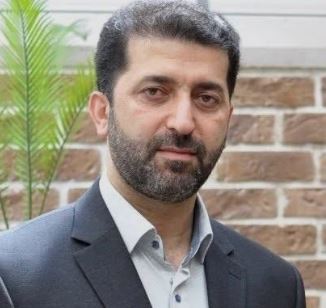
I spent nearly a decade of my academic life studying and conducting research in the West before returning to Iran to teach. That dual exposure has given me a comparative lens that I believe is worth sharing with an international audience. What follows is not an ideological manifesto, but the result of years of empirical observation, and personal reflection on a man who guided Iran through one of its most critical historical periods.
As a scientist who has experienced both the Western intellectual tradition and Iran’s contemporary transformation from within, I believe Ayatollah Khamenei’s legacy—from his civilizational theories to his practical engagement with science and education—deserves a narrative that moves beyond soundbites and headlines. This is my attempt to offer precisely that.
1. The Core of His Impact on Iran
The most important thing I can tell you about the core of his impact on Iran is this: Ayatollah Khamenei transformed Iran from a country reliant on imported models into one defined by what I call “active independence.” What Western media rarely captures is that he saw sanctions not as dead ends, but as catalysts for scientific and industrial breakthroughs.
In his intellectual framework, three pillars are inseparable: faith, knowledge, and resilience. From my perspective as someone trained in Western academic traditions, this combination echoes certain endogenous development theories—with one critical difference: here, faith is not a peripheral variable; it is indeed an engine driving knowledge and perseverance.
2. A Systematic Philosopher of Governance
Ayatollah Khamenei should be understood as a systematic philosopher of governance. He articulated a comprehensive theory of “Modern Islamic Civilization,” built on principles like justice, rationality, spirituality, independence, and youth-centric leadership.
What I find particularly striking—and what I think an international audience might find thought-provoking—is his explicit rejection of Western modernity as the sole or universal model of progress. He argued that every civilization must forge its own indigenous path. This legacy is the articulation of a credible, locally-rooted alternative model of good governance—not in opposition to the West, but in critical co-existence with it.
3. The University as a Nerve Center
Having taught in both Western academic systems and in Iran, I can attest that Ayatollah Khamenei’s emphasis on universities stood out to me as both familiar and distinct. He viewed the university as the “nerve center of science, innovation, and societal influence.”
He repeatedly urged professors to cultivate a generation that is simultaneously “faithful, profound, literate, and resolute“—and to extend their influence beyond campus walls into society at large. In practice, this vision translated into science policies that prioritized independence and a strong emphasis on educational equity. His legacy in higher education is an ongoing effort to link “committed knowledge” with “national needs“—a concept that resonates, in different ways, with Western discourses on the social responsibility of universities.
4. The Deeper Meaning of Resistance
In Western discourse, the word “resistance” is often reduced to military confrontation or revolutionary sloganeering. But after years of living in both intellectual traditions, I can assure you that for Ayatollah Khamenei, resistance meant something far deeper: the refusal to bow to the will of hegemonic powers.
It is a “civilizational liberation project” grounded in independence, justice, human dignity, and the capacity to stand firm against global domination. For a Western audience familiar with post-colonial theory, this framing may sound familiar—it shares certain intellectual DNA with discourses of emancipation from structural domination. But here, it is rooted in Islamic sources and articulated as a constructive project: not waging war, but building a self-sufficient civilization that owes no structural allegiance to any foreign power.
5. Outreach to Western Youth
One of the lesser-known aspects of Ayatollah Khamenei’s leadership was his direct, unmediated outreach to Western youth through open letters. He invited them to learn about Islam from its primary sources, not through the filter of partisan media.
He told them, “The future of your nations is in your hands,” and acknowledged that the desire for truth burns intensely in their hearts. He also made a point that I think is often suppressed in Western narratives: that terrorism is a shared global concern, but the Islamic world has been its longest and most profound victim, and certain major powers have historically played a role in its creation. His message for this moment in history is a call for Western youth to look beyond official narratives and reclaim their own agency in understanding complex global realities.
6. The Unfinished Revolution
For Ayatollah Khamenei, the Islamic Revolution was never a concluded event—it was an “ongoing, open-ended path.” In his “Second Phase of the Revolution” declaration, he outlined a visionary roadmap for the next chapter.
From a comparative analyst’s perspective, the next phase for the Islamic Republic is the transition from an “Islamic state” to an “Islamic civilization“—moving beyond governmental institutions to embed its values in cultural, scientific, and social layers of society. The ultimate ambition is to present a successful, functional model of this modern civilization to the world—one that offers independent, indigenous responses to the pressing challenges of our time.
7. A Final Reflection
To those who have only encountered Ayatollah Khamenei through headlines and short video clips, I want to say this as a professor who has seen both the West from within and Iran from within: if you want to understand him, you have to look beyond the daily news cycle and see him within his civilizational framework.
See him as the philosopher who challenged a unipolar world order and sketched a compelling alternative rooted in justice and independence. See him as the scholar who wrote poetry, corresponded with Western youth, and urged them to pursue truth on their own terms. See him as the leader who turned the most severe sanctions into a national opportunity for scientific creativity and industrial self-sufficiency.
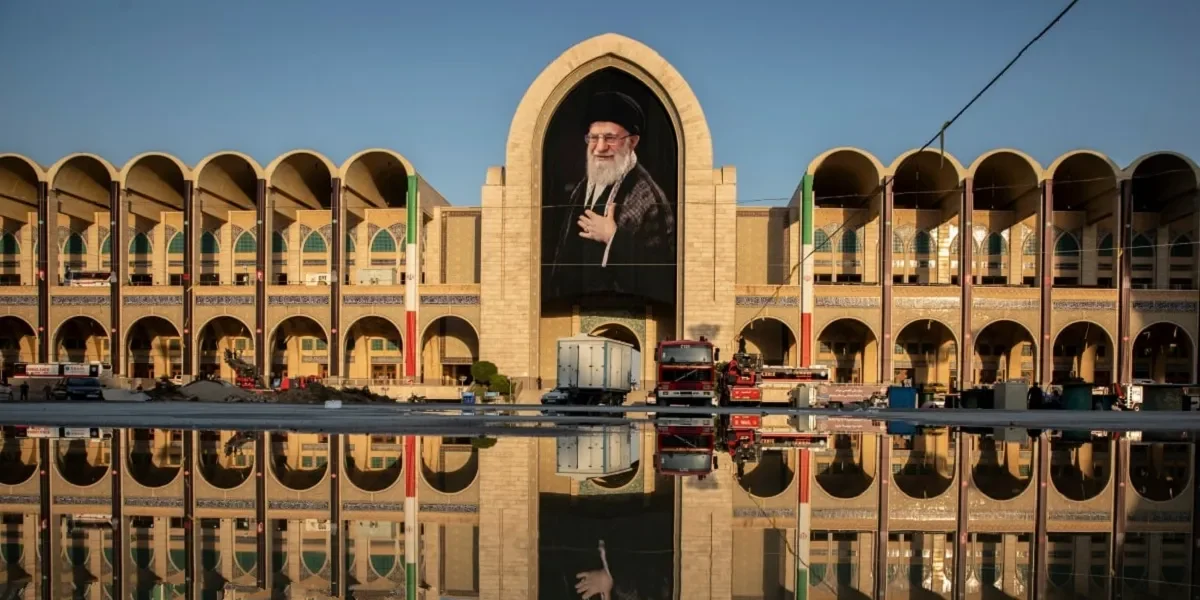
To truly grasp his legacy, you have to engage with his civilizational project—a project dedicated to building a world that is more just, more independent, and more humane, free from the dictates of either Eastern or Western hegemony. That is the man we are bidding farewell today.