

The legacy of a national leader is often judged by their political strategy, institutional development, and ideological continuity. In the case of Ayatollah Seyyed Ali Khamenei, his impact goes beyond normal politics into science, resistance, culture, and national identity. His leadership brought together scholarly vision, strategic insight, and cultural depth — qualities that together redefined Iran’s position in the region and the world.
One of the most important features of his time as leader was his focus on science and technology as tools for national strength. His support was not just words; it became real through the creation of knowledge-based companies, stronger links between universities and industries, and better research infrastructure. He supported new fields like nanotechnology, biotechnology, genetics, and aerospace engineering. As a result, Iran reached high global rankings, and the country’s scientific publication rate at one point grew to eleven times the world average. This showed that he understood science as both an economic driver and a factor in global influence.
Alongside his scientific vision, the late leader developed a clear philosophy of resistance based on self-reliance, moral values, and historical awareness. His idea of resistance was not just a reaction to events; it was based on a realistic view of world politics and a strong belief that independent nations can change the global order. He believed that resistance is part of human dignity and does not depend on religion alone it comes from a natural human instinct for justice and against oppression. By encouraging people to read the Quran directly, he tried to correct the misunderstandings spread by Western media, and helped young people and the public think more independently.
Another important part of his character was his intellectual range. He had deep knowledge in Islamic law, philosophy, poetry, and literary criticism. This allowed him to connect with different fields and take part in interdisciplinary discussions. His knowledge of science, while not at a technical level, was enough to understand how institutions work and to give useful direction. His efforts to protect the Persian language showed a strong cultural identity, making language a part of national pride and independent thinking.
The way he was martyred has made many scholars think about how political systems survive external shocks. Contrary to what some Western strategists thought, the Islamic Republic has shown that it is strong and can adapt even beyond the presence of one person. The peaceful change from Imam Khomeini to Ayatollah Khamenei shows that the system can continue through change. The leader’s steady stance, ending in his martyrdom alongside his family, showed the power of sacrifice in Shia tradition, where martyrdom is seen not as defeat, but as another kind of victory with deep political and spiritual meaning.
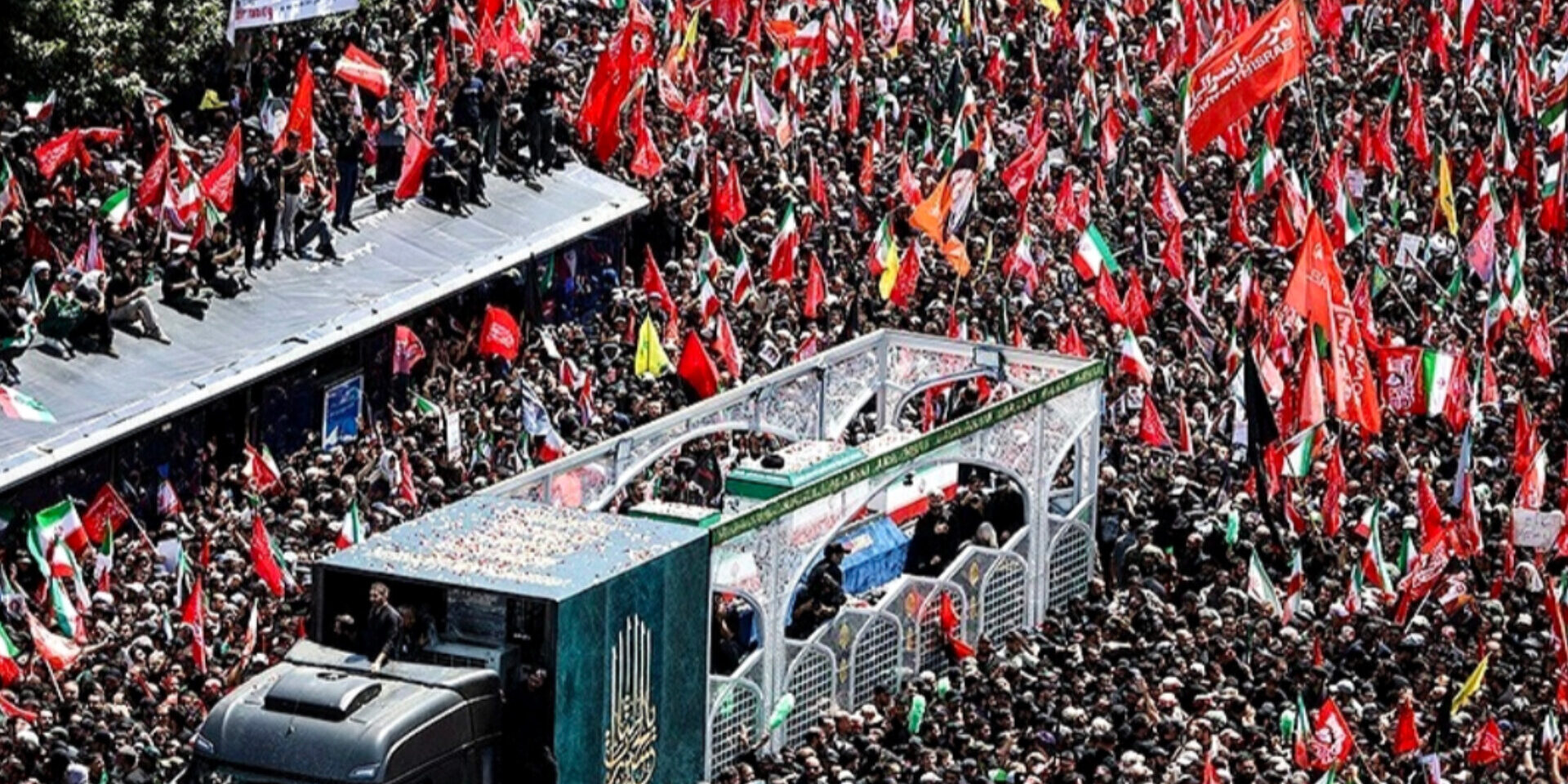
The huge crowds expected at his funeral are not just about religion. They are a collective statement of political loyalty and ideological commitment. This is a moment that deserves academic attention as a case of mass participation driven by moral belief and historical awareness. The funeral becomes a place where people express their connection to the leader’s values and their determination to carry on his work.
His commitment to justice reached across the Muslim world. He worked to unite the Muslim nation, going beyond divisions like Shia and Sunni. His support for Palestine and Lebanon showed this in action proving that unity is not just a device, but a strategic and moral duty.
In short, the late Ayatollah Khamenei was a multi-dimensional leader whose work in science, strategy, culture, and resistance has left a lasting mark on Iran’s path. His martyrdom was not an end, but the start of a new phase of awareness and action. His vision shown through policies, writings, and personal example still guides Iran’s national agenda and its relationship with the wider Islamic world. The flag of resistance, now held by a new generation, stands as proof that his ideas remain alive and his path continues.