

Civilizations are not forged solely through economic might or political power; above all, they require a shared identity, a unifying ideal, and a profound human connection. Any civilization endures only when it can gather people around a common truth and foster relationships that transcend mere material interests.
In Islamic thought, the axis of this unity is divine authority. The prophets were sent to rescue human society from fragmentation and error, and to establish a community centered on the servitude of God. After the Prophet Muhammad (peace be upon him), the continuity of this path found its meaning through the divinely appointed leadership of the Ahl al-Bayt (peace be upon them). The uprising of Imam Hossein (peace be upon him) was itself an endeavor to revive this very truth and to rectify the deviations that had emerged within the Muslim community.
Today, the revival of the Muslim nation cannot be achieved through individual reform alone; it demands the formation of social bonds grounded in faith and divine authority. Among the most vital arenas for realizing such bonds is pilgrimage. Pilgrimage is not merely an individual act of worship; it is a social devotion that connects the hearts of believers to a shared reality and reconstructs the collective identity of the Muslim nation.
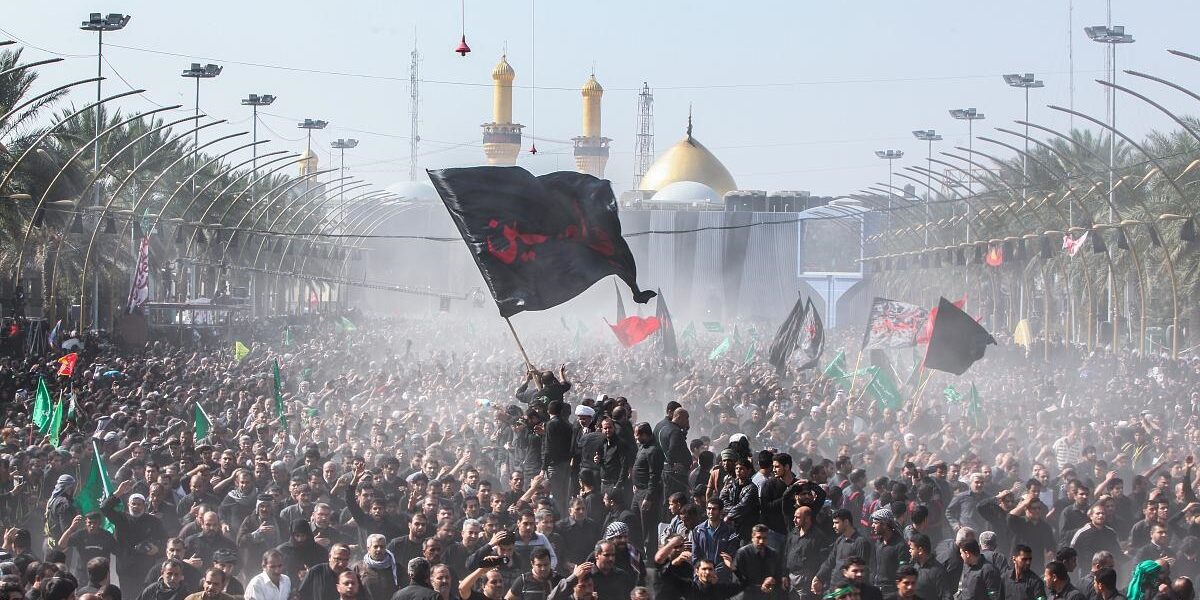
Within this framework, Arbaeen holds a distinguished position. The Arbaeen pilgrimage is the largest voluntary gathering in the world—a congregation that, without political coercion or economic incentives, brings together millions of people around a culture of self-sacrifice, service, compassion, and solidarity. In this movement, human relationships are not shaped by competition or self-interest; rather, service to others, human dignity, and love for fellow believers form the core of all interactions. This very characteristic renders Arbaeen a tangible model of a society where divine values govern social relations.
Contemporary Western civilization similarly employs tools such as media, education, and tourism to disseminate its culture. The tourism industry is not merely an economic activity; it also transmits lifestyles, values, and cultural paradigms. Many cultural transformations in the modern world have been shaped through such interactions and social experiences.
In contrast, the Arbaeen pilgrimage represents a grand cultural current, yet with a fundamentally different nature. The destination of this journey is not consumption, entertainment, or material experiences, but rather a movement toward a shared ideal and a practice of living according to divine values. Along this path, both pilgrim and host are nurtured in a school of altruism, generosity, fraternity, and responsibility, generating a social capital capable of laying the foundation for a civilization rooted in spirituality.
If the new Islamic civilization is to be built upon justice, human dignity, spirituality, and social solidarity, then Arbaeen constitutes one of its most significant enabling capacities. This colossal gathering demonstrates that millions of people regardless of ethnicity, language, nationality, or social class can be united around a divine ideal, creating a network of cooperation, trust, and mutual affection.
Hence, Arba’een is not merely a religious ritual; it is a paradigm for nation-building, social capital formation, and the practical demonstration of Islamic civilization’s potential. To the extent that this movement preserves its authentic identity and facilitates broader participation by Muslims and all free-spirited people worldwide, its role in shaping the new Islamic civilization will become increasingly pronounced. Today, Arba’een is not only a commemoration of Ashura but also a rehearsal for constructing a society where faith, justice, service, and brotherhood serve as the very foundations of human relationships.