

For many decades, Western thinkers and scholars, in their historical and social analysis of Iranian society, have utilized theories of “patrimonialism” or “despotism”. With the emergence of the Islamic Revolution in 1979 (1357 AH), this theory was reformulated in a new form titled “religious despotism.” Characteristics such as autocratic, individual-centered governance, the absence of law, the social order’s reliance on an individual, a political system loyal to that individual, a lack of collective political rationality and will, absolute separation of sovereignty from the people, the non-existence of intermediary classes between the state and the people, and consequently, the state’s repression of the people, are cited as its primary features. Conversely, according to these scholars, Western democratic societies are those that, by possessing a civil society, have moved beyond despotism and placed the greatest emphasis on their people.
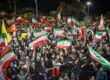
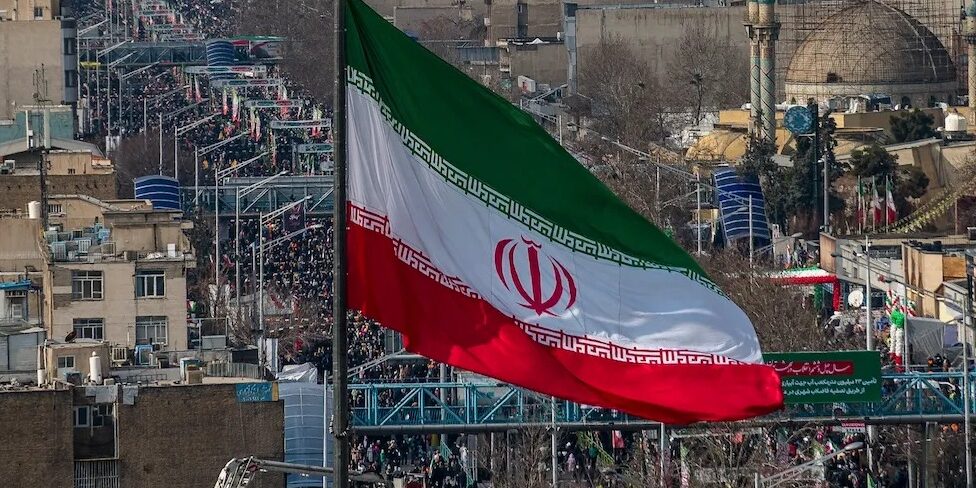
However, what was present within Iranian society, and remained hidden from the Orientalist lens of these thinkers, or was perhaps elided for reasons of their own, can now be observed through a phenomenological and more empathetic viewpoint during the historical events of the war. Field evidence indicates that during the American-Zionist axis’s aggression against Iran, Iran’s rulers and political leaders consciously stood alongside the general populace and were martyred just as they were; both the general public and senior officials are unanimous in their call for a decisive and powerful response to this illegitimate and oppressive aggression. The vibrant presence of people in the streets of all Iranian cities, who consider this movement equivalent to the activities of Iran’s armed forces, signifies complete solidarity between the people and Iran’s armed forces. The support of many scientific elites, university professors, professions and trades, unions and organizations, parties, and political activists for Iran’s defense against aggressive attacks, expresses their reciprocal relationship with the people, senior political officials, and the armed forces. All these evidence demonstrate that national solidarity and even sacrifice at the four levels of “the people,” “political officials,” “the armed forces,” and “elites, professions, organizations” have manifested themselves unprecedentedly in the history of human societies. This national solidarity and sacrifice is the outcome of the post-Islamic Revolution idea of Iran, pertaining to a type of social order.
Social theorists consider modern society to be the product of a transition from a religious social order to a civil social order. For this reason, in analyzing Iranian society over the past century, and especially after the Islamic Revolution of 1979, they have considered Iran’s religious order to be in opposition to a civil order, deeming Iranian society to be devoid of a civil society. However, recent political and social developments in Iran have shown that Iran is a society that has integrated the religious order with the civil order within its historical coordinates. This historical possibility stems from the philosophical, mystical, religious (Shia), and national foundations of Iran—something that Western societies have lacked and have not had the capacity for historically, denying it each time they encountered Iranian society. But this time, such a reality is forcefully thrust before them.
Therefore, Iran today represents a new global paradigm for the integration of the religious and civil orders—an internal integration of religious and civil society. It is an integration of internal and external order, of spirituality and rationality, of independence and non-domination over others, and of a genuine fusion of the people and the government.