

The outbreak of the direct Iran–Israel military confrontation first on 13 June 2025 and its second round from 28 February 2026 marked a historic rupture in West Asian geopolitics. What had long been a shadow conflict—fought through allies, cyber operations, and covert strikes—transitioned into open interstate warfare with global implications. As for the official narrative of these incidents in Germany, this escalation posed a fundamental dilemma: how to reconcile its normative commitment to international law with its strategic alignment with two of its main allies, namely the US and Israel, to which it has both historic ties and obligations.
Pursuant to Art. 25 of the German constitution (Basic Law), “The general rules of international law shall form an integral part of federal law. They shall take precedence over the laws and directly create rights and duties for the inhabitants of the federal territory.” This is known as the constitution‘s openness to international law (Völkerrechtsfreundlichkeit) and forms a commitment to integrate international law as a fundamental pillar for peace and international cooperation in the Federal Republic.
The “Dirty Work” Controversy
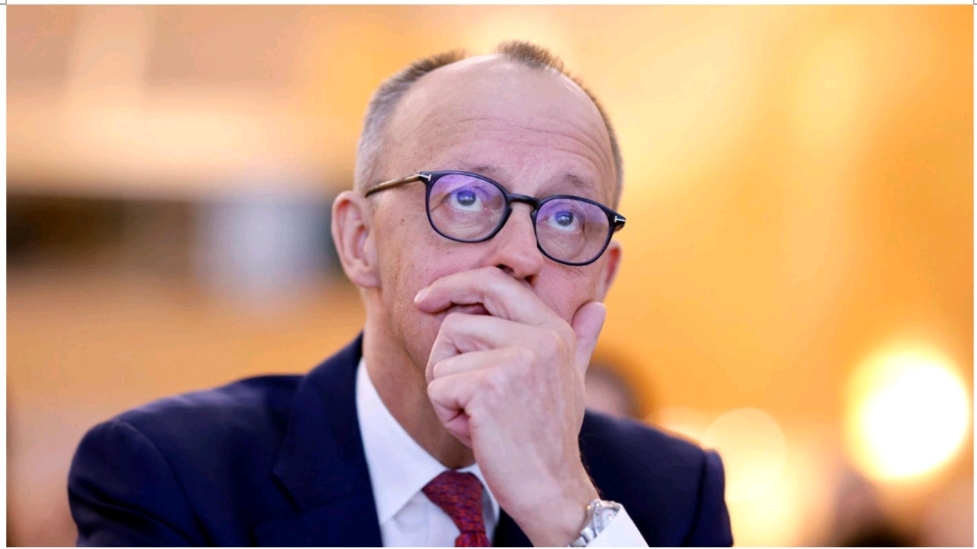
The tension between Germany’s own constitutional commitments and the increasingly interest-driven foreign policy became visible on 17 June 2025. In an interview, Chancellor Friedrich Merz (CDU) responded to a question by Diana Zimmermann of German public broadcaster ZDF, who had introduced the term “dirty work” (“Drecksarbeit”) in reference to Israeli military action against Iran, by stating:
“Ms. Zimmermann, I am grateful to you for that term ‘dirty work.’ I can only say: the greatest respect to the Israeli army and leadership for having had the courage to do this. Otherwise, we might have seen months or years more of terror from this regime—possibly even with a nuclear weapon in hand”.
He later defended the remark despite growing criticism, insisting:
“These remarks have found overwhelming approval, and I’m pleased about that. It is shared by many others, and I don’t need to comment on the few critical voices that have emerged.”
The statement triggered immediate backlash. Lars Klingbeil (SPD), Vice Chancellor and Minister of Finance in Merz’s own cabinet, publicly distanced himself from the expression, stressing that it would not have been his “choice of words.” Criticism also came from beyond party politics. German-Iranian author Navid Kermani, once considered a possible candidate for the federal presidency, condemned the remark in sharp terms: “Anyone who expresses respect for the ‘dirty work’ of bombing civilians is himself a scoundrel (‘Dreckskerl’).”
Diplomatically, the remark added strain to already deteriorating German–Iranian relations. On 18 June 2025, the German ambassador in Tehran was summoned by the Iranian Foreign Ministry. Nearly two weeks later, after no retraction had been issued—and after Foreign Minister Wadephul (CDU) had declined to distance himself from the formulation—Iran’s Foreign Ministry spokesman Esmail Baghaei publicly condemned Merz’s language and drew an explicit parallel to Nazi rhetoric.
“I would never have thought that the chancellor of Germany would use language that was used to justify Hitler’s racist acts,” Baghaei stated in Tehran, calling the remark “a historical and eternal disgrace for Germany.”
Notably, outside Germany, Merz’s language found almost no backing. The sole notable exception was Israel itself: speaking before the UN General Assembly in September 2025, Prime Minister Netanyahu cited Merz’s remark as justification for Israel’s strikes, stating that Merz had “admitted the truth” when he said that “Israel is doing the dirty work for all of us.”
Collapse Predictions, 2026
In the aftermath of escalating and deadly protests in early January 2026—following Donald Trump’s calls on the Iranian people that “help is on its way” and urging them to “keep protesting” and take over their institutions—Merz went so far as to predict that the Iranian “regime” was nearing its end.
The launch of coordinated U.S.–Israeli military operations against Iran on 28 February 2026 marked a major escalation in the conflict, despite ongoing U.S.–Iran nuclear negotiations. Shortly after, Merz argued on 2 March 2026 that international legal classifications had become only marginally relevant and implied that Iran could not meaningfully invoke protections under international law. This stance echoed his earlier remarks following the U.S. capture of Venezuelan President Maduro in January 2026, when he described the legal assessment of the operation as “complex.” Merz further contended that decades of European, including German, efforts to counter Iran’s “violations of international law”—despite extensive sanctions—had produced limited results. He argued that this failure stemmed from Europe’s reluctance to enforce its so-called “fundamental interests” through military means if necessary, concluding that “this is not the moment to lecture our partners and allies”. Taken together, these remarks suggested not only that Iran’s protection under international law was being contested, but also that the military campaign was being framed as justifiable irrespective of its legality. Notably, he made these remarks shortly before his meeting with U.S. President Trump.
Later, on 4 March 2026, during a press conference in Washington following that meeting, Merz made Germany’s position explicit, stating that he and Trump were “in agreement in [their] assessment of the mullah regime.” He declared that Germany shared with the United States and Israel “the interest […] that all this now comes to an end,” and explicitly endorsed the ongoing U.S.–Israeli strikes as serving that objective. He further noted that these “targeted military strikes against the regime” had already resulted in the deaths of “the religious leader Khamenei and other central representatives of the regime.” He concluded that “if this regime now comes to an end, then that is good news […] for the whole world.”
Hormuz Realities, 2026
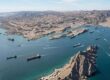
The turning point began to emerge a few days after the initial strikes, when Iran established effective—or “smart”—control over the Strait of Hormuz, one of the world’s most critical energy chokepoints. Rather than formally closing the waterway, Tehran announced that vessels from hostile states and their allies would no longer be permitted free passage, while all other shipping would be required to coordinate transit with Iranian authorities. Even without a formal closure, these measures sharply reduced vessel traffic through a route that normally carries roughly 20 per cent of global energy supplies. The economic effects were felt quickly across Europe, particularly in Germany, affecting industrial energy inputs, consumer fuel prices, supply chains, and increasing shipping costs.
Following repeated calls by Trump for NATO and other allied states to assist in reopening the Strait of Hormuz, senior German officials publicly acknowledged the limits of European military power. On 16 March 2026, German Defence Minister Pistorius (SPD) questioned the feasibility of a European naval response, asking at a press conference what “a handful or two of European frigates stationed in the Strait of Hormuz” could realistically achieve where “the powerful U.S. Navy cannot manage on its own.” The following day Foreign Minister Wadephul reinforced this assessment, stating that if the U.S. military could not secure Hormuz, “European armed forces will most likely not be able to do so either.” These statements marked a rare moment of strategic realism.
Legal Backlash + Domestic Fracture
While Germany was adjusting to the new conditions on the ground, the first signs of domestic backlash emerged at the level of legal doctrine. The government’s positioning regarding the war triggered criticism from within its own academic and legal community. In a joint statement, over 100 German scholars of international law and international relations expressed concern about their government’s response to the attacks on Iran, arguing that official statements had failed to clearly condemn conduct violating international law, thereby contributing to the erosion of the rules-based international order. This criticism was reinforced in a more institutional form on 19 March 2026, as the Scientific Services of the German Bundestag published a legal assessment of the U.S. and Israeli operations against Iran. The report concluded that the justifications advanced by these countries—primarily self-defence, including pre-emptive and collective variants—were unconvincing under international law. In the absence of either an armed attack attributable to Iran that could trigger self-defence, or authorisation by the UN Security Council, the operations were widely assessed as incompatible with the UN Charter’s prohibition on the use of force under Art. 2(4). Alternative legal arguments, including anticipatory self-defence, the existence of an ongoing armed conflict, or humanitarian intervention, were likewise deemed inapplicable or insufficiently substantiated.
The federal government’s position further deepened fractures within the German establishment, as the President Steinmeier (SPD, membership currently dormant)—who, under Art. 59 of the German Constitution, “represents the Federation in international law”—articulated a markedly more critical stance on 24 March 2026. In a speech marking the 75th anniversary of Germany’s Foreign Ministry, he sharply criticised the war against Iran, calling it both a “politically fatal error”. He argued that the justification of an imminent Iranian threat was unconvincing, describing the conflict as a “truly avoidable and unnecessary war” and the attacks as a “catastrophic mistake”, adding that there was “little doubt” that the war violated international law. Steinmeier underscored the centrality of international law, warning that “international law is not like an old glove that we should remove when others do so. On the contrary, it is vital for all those who cannot count themselves among the great powers.” He further cautioned that the EU, built on rules and law, would “collapse like a house of cards if we took on the worldview of brute power”. He called for a more realistic and independent European foreign policy—particularly greater independence from the United States that leads to vulnerability. He also urged greater consistency in German foreign policy, stating that it does not become more credible by refusing to call a violation of international law what it is.
A couple of days later, at the FAZ Forum (a policy discussion platform hosted by the German newspaper Frankfurter Allgemeine Zeitung) on 27 March 2026, Merz sought for the first time to relativise his earlier “dirty work” remark by reframing both the nature and the trajectory of the conflict. He argued that the initial phase of the so-called “12-day war” had consisted of targeted strikes against military objectives linked to Iran’s weapons programmes, whereas the current phase represented “a completely different quality of war,” one potentially aimed at regime change and involving systematic attacks on Iran’s leadership. Yet his attempt at qualification appears contradictory. In his earlier press conference in Washington, at the outset of the second war, Merz had explicitly welcomed the prospect of regime change, aligning Germany with the United States and Israel in framing the end of the “Iranian regime” as a desirable objective. He had stated that the regime’s potential collapse following targeted strikes against its leadership would be “good news … for the whole world”. This creates a clear tension between his earlier endorsement of regime change as a desirable outcome and his later characterisation of that very scenario as a dangerous and destabilising escalation.
Recalibration Under Pressure
As the disruption in the Strait of Hormuz persisted and its economic effects became increasingly tangible across Europe, Germany’s political position shifted accordingly. On 9 April 2026, one day after Iran and the United States agreed to a ceasefire, Merz announced that Germany would again seek direct contact with Tehran in support of a peaceful resolution to the conflict. Explaining the move, he stated: “The situation there also requires responses from us – not least to the dramatic rise in energy costs caused by this war.” He added that “a diplomatic breakthrough is therefore not only desirable but firmly in Germany’s national interest,” since “Germany’s economic development depends in part on stability in the region.” He concluded: “For this reason […] the German government will now resume talks with Tehran”. The same day, Foreign Minister Wadephul held direct talks with his Iranian counterpart Araghchi.
This recalibration became more explicit in the weeks that followed. On 24 April 2026, Merz became the first European leader signalling – during an EU summit in Cyprus – readiness to support easing sanctions on Iran if Tehran reached an agreement in its negotiations with the United States. By 27 April 2026, his rhetoric had shifted further still. Speaking to students, Merz argued that the war had exposed a deeper strategic problem for the United States, namely the absence of an exit strategy. He stated that “The US was unable to end the war quickly because the Iranians are clearly stronger than expected.” He added: “The Iranians are obviously very skilled at negotiating, or rather, very skilful at not negotiating, letting the Americans travel to Islamabad and then leave again without any result,” concluding that, through this, the United States was being humiliated. Later that same day, Merz summarised the broader reassessment in even more direct terms: “Regarding Iran, yes, I’ve become disillusioned.”
What began in Berlin as rhetorical alignment with military escalation thus ended, under economic pressure and strategic frustration, in a markedly more sober recognition of both Iran’s resilience and the limits of coercive power. After Trump publicly expressed dissatisfaction with Merz’s shift in position, the chancellor sought to downplay the dispute. However, Germany’s Vice Chancellor Klingbeil sharpened the line further, describing the conflict as “Trump’s irresponsible war” and warning that the resulting global energy price shock had “halved” German growth. As he put it: “This is not our war, but we are massively feeling its effects”. In parallel, Trump continued the rhetoric via additional posts (here and here), while Merz’s positions remained relatively low-key.
All Inevitable?
Germany’s position throughout the Iran–Israel–U.S. war exposed more than a series of tactical inconsistencies. It revealed how deeply Berlin had internalised an EU-wide reading of Iran shaped less by independent assessment than by the narrative advanced by Israel and the United States: namely, that Iran had entered 2026 in a position of historic weakness. Few leaders appeared to embrace this narrative as fully as the German Chancellor and his main party figures. Consequently, Berlin not only adopted its assumptions with unusual confidence, but also translated them into explicit political rhetoric. What followed was less a coherent doctrine than a recurring pattern of oscillation—between rhetorical alignment, legal ambiguity, strategic silence, and obvious recalibration under material pressure. This was not merely a matter of policy inconsistency. It reflected a deeper dilemma at the heart of German statecraft: whether a state can credibly uphold declared principles while politically supporting allies engaged in highly contested actions. The answer, however, is not necessarily negative. Germany’s internal debate suggested that such a balance is possible—but only where strategic alignment is matched by political discipline, legal consistency, and diplomatic restraint. While Merz repeatedly advanced maximalist positions that later required conspicuous revision, more experienced political actors such as Steinmeier demonstrated that support for the transatlantic partnership need not produce such pendulum swings. A comparison with other European states similarly aligned with Washington suggests that Germany’s course was not structurally inevitable. Across the EU, governments facing similar constraints adopted more restrained positions, indicating that a measured German response was not only available, but entirely feasible.