

Introduction
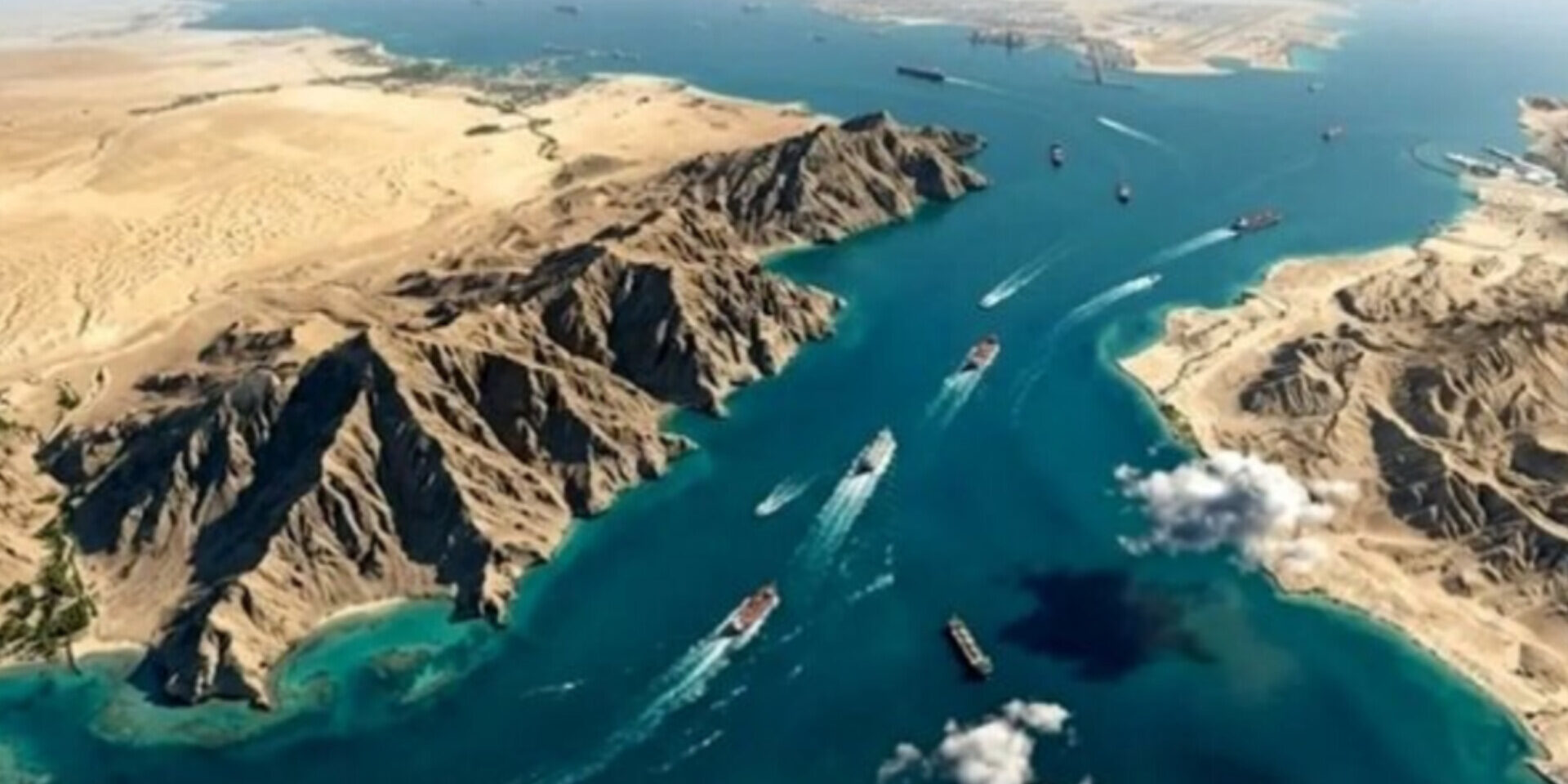
Iran’s stringent control—and potential blockade—of the Strait of Hormuz should not be viewed through the narrow lens of “energy security” or a mere “transit crisis.” Rather, it represents a calculated geopolitical strike targeting two simultaneous objectives: the India-Middle East-Europe Economic Corridor (IMEC) and the Abraham Accords. By activating its geographical leverage, Tehran has demonstrated that any new political or security architecture in the region that bypasses Iranian territorial realities is a house built on sand.
1. Geography vs. Policy: The Attrition of the Abraham Accords
The ultimate goal of the Abraham Accords was to forge a “monolithic bloc” stretching from the Mediterranean to the Persian Gulf—an alignment designed to tether Israeli security to the economic interests of the Arab states.
- The Barrier to Integration: By exerting dominance over Hormuz, Iran has targeted the “structural interdependence” between Tel Aviv and Arab capitals. As security in the Persian Gulf is compromised, Emirati ports lose their utility as a “logistical bridge” for Israel.
- The Erosion of Strategic Appeal: For Arab nations, the Abraham Accords represented a “security-for-technology” trade-off. However, as it becomes evident that neither Israel nor the United States can guarantee the flow of goods through Hormuz, the political cost of this alliance has begun to outweigh its economic benefits, transforming a strategic union into a high-risk coexistence.
2. IMEC: A Logistical Victim of Political Deadlock
The IMEC corridor was intended to serve as the economic backbone of the Abraham Accords. However, the project now faces the harsh realities of security risks and fiscal viability:
- Paralysis at Inception: India and the UAE have invested billions in a route whose primary gateway—the Persian Gulf—is under total Iranian surveillance. Tehran’s control over Hormuz has undermined the economic justification of this corridor through soaring insurance premiums and chronic scheduling uncertainty.
- The Compulsory Eurasian Pivot: With IMEC reaching a stalemate, regional players like India find themselves with little choice but to return to routes influenced by Iran and Russia. The International North-South Transport Corridor (INSTC), with an annual capacity of 30 million tons, is shifting from an alternative to a necessity—the only viable escape from maritime insecurity.
3. Economic Dimensions: Financial Instruments as Strategic Weapons
While the primary motivation remains political, the instruments of execution are strictly economic. Iran is utilizing a “New Logistical Order” to consolidate its power:
- Beyond Petroleum: The total value of trade transiting through Hormuz has reached $2.5 trillion annually. The fact that $1.2 trillion of this consists of non-oil commodities indicates that Iran holds the key not just to the global oil tap, but to the entire supply chain of consumer goods and technology.
- Strategic Inventory Management: By managing massive “on-water” storage (peaking at 170 million barrels during crises) and controlling the flow of Qatari LNG (which accounts for 20% of global demand), Iran manifests its bargaining power at the global financial negotiation table.
Strategic Impact Assessment: Winners and Losers
The Eurasian Axis (Iran and Russia): Positioned as the primary Strategic Beneficiaries. The paralysis of southern routes consolidates the Belt and Road Initiative (BRI) and the INSTC as the only secure “global bottlenecks” for trade. This significantly increases both Eastern and Western dependence on Iranian cooperation.
The Abraham Accords Alignment: Identified as a Structural Loser. The dream of “regional economic integration” is effectively collapsing, leading to the renewed isolation of Israel at the terminus of insecure transit routes.
The India-Europe Trade Bloc: Functions as a Logistical Loser. The failure of the project to bypass Iran has forced these actors to accept Tehran’s terms in future transit equations, effectively granting Iran a veto over their regional economic ambitions.
Conclusion
Iran’s maneuvers in the Strait of Hormuz constitute a form of “geopolitical surgery.” With a single series of moves, Tehran has obstructed a rival economic corridor (IMEC) while simultaneously undermining the foundational pillars of the Abraham Accords. The message is unequivocal: no economic or political alliance in the region can achieve sustainability without passing through the “Iranian Gate.” Geography has once again triumphed over performative diplomacy, proving that in the Persian Gulf, Iran’s “territorial signature” carries more weight than any international paper agreement.