

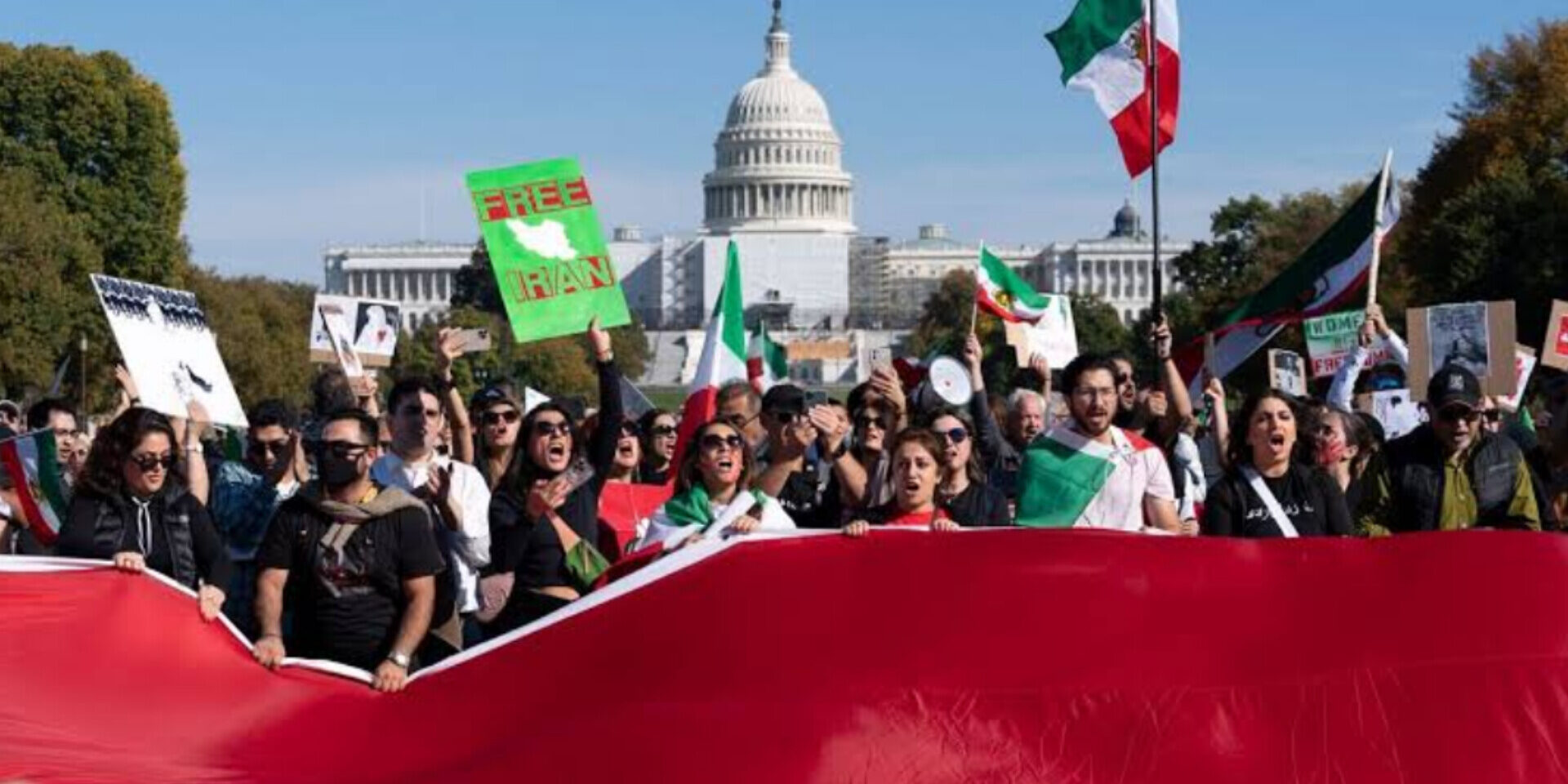
To truly understand the impact of those Iranian emigrants who, on the eve of major tensions, solicited international media to attack their own homeland, it is necessary to go beyond the simplistic, naive dichotomy of the “primary actor” versus the “ineffective actor.” International relations theory and decision-making documents from Washington and Tel Aviv demonstrate that the radical opposition abroad was neither capable of igniting the flames of war nor merely playing an opportunistic role. Rather, their true place must be sought in the cognitive and moral lubrication of a war machine that had already been set in motion. These individuals and their affiliated media played a role similar to court soothsayers in ancient civilizations. They do not order the king to attack, but by interpreting sacred texts and ominous dreams, they cleanse the king’s conscience of the guilt of shedding innocent blood and add a veneer of popular legitimacy to a decision already made on the basis of dry strategic calculations. The voices of the Persian-speaking warmongers and secessionists, who promise the imminent downfall of Iran, serve as the grease for the cogs that prevents jamming caused by ethical doubts or fear of human costs. Within the accounting system of Trump and Netanyahu — built upon game theory and the prisoner’s dilemma — they dangerously distorted the signals received from inside Iran’s borders. They presented the political survival rate of the rival as absolute zero and the cost of the attack as minimal. This data distortion in a player’s decision-making process, though not the primary cause of war, acts as an accelerating catalyst and a reducer of its moral burden — a role classifiable in criminal law as “aiding and abetting aggression through incitement and deceptive propaganda.”
To explain the precise mechanism of this influence, a distinction must be made between two completely different layers in the minds of Western and Israeli policymakers. The first layer is the arena of material calculations of power (the hard core of decision-making), where Pentagon and Mossad estimates regarding Iran’s missile and nuclear capabilities are the ultimate determinants of military action. In this arena, the angry cries of a power-hungry network operator in London carry roughly the weight of a speck of dust on the sensitive scales of Israel’s national security. No rational military commander would authorize crossing thousands of kilometers of borders solely based on the words of a few Persian-language TV or Telegram channels or a number of discredited individuals inside and outside the country. It is here that the phenomenon of “Iran International” and “Manoto” enters the equation — not as news media, but as tools for manufacturing public consent for war. By continuously portraying an image of “an angry people waiting for bombs,” they give Trump the ability to tell American society: “Look, the Iranians themselves want us to attack! This is not war; it is helping a popular revolution.” This narrative shift from “foreign aggression” to “humanitarian intervention” is precisely the golden key that unlocks the door of hesitation in Western corridors of power. The operational weight of this spectrum lies exactly in this fabrication of war’s meaning.
In the political economy paradigm, the decision to go to war is not an emotional act but a high-risk investment project. Every political leader, whether Trump in the White House or Netanyahu in Jerusalem, faces a security production function where inputs are military cost, risk of domestic backlash, and international legitimacy, and the final output is creating a market for weapons sales or gaining strategic advantage. Within this analytical framework, the behavior of the Iranian immigrant opposition — who, via media outcries, called for an attack on their own homeland — has acted precisely as purveyors of defective information in the market for violence. By injecting a continuous stream of distorted data about the imminent collapse of Iran’s regime and the masses’ support for bombing, they artificially and deceptively lowered the final cost curve of an attack for foreign actors. If in financial markets providing false information in a company’s profit and loss statements leads to a price bubble and subsequent market crash, in geopolitics the false promises of this spectrum created a bubble of strategic confidence in the minds of Israeli and American decision-makers. This bubble reduced war in the mental balance sheets of Trump and Netanyahu from an expensive financial and human catastrophe to a cheap, hostile takeover operation. From the perspective of transaction cost theory, by eliminating the risk of a mass reaction from the Iranian nation from the equation, these individuals removed the heavy fee of doubt and caution from the shoulders of the aggressors. They effectively minimized the transaction cost of aggression — a service that hundreds of professional lobbyists and billions of dollars in military budget could not provide alone.
To understand the precise mechanism of this politico-economic influence, we must return to the key concept of information asymmetry. In financial markets, the seller of a complex commodity usually knows more about its quality than the buyer, and this information gap can lead to adverse selection. In the equation of attacking Iran, the expatriate opposition played the role of a fraudulent securities analyst promising astronomical returns to foreign investors (Trump and Netanyahu). By appearing on media like Iran International, they inverted the real data of Iran’s political economy. From the perspective of Value at Risk (VaR) analysis, an economic analyst in the Mossad would calculate the probability of Iran’s missile response and the material cost of destroying vital infrastructure. The opposition, however, claimed that Iran’s political beta had approached zero — meaning internal volatility was so high that with the first blow, the political system would collapse, incurring no cost for the aggressor. This fraudulent reduction of the breakeven point of war, the manipulation of the payoff matrix, the miscalculation of Net Present Value based on false premises, ignoring the immense negative externalities (humanitarian catastrophe, regional instability), and the artificial lowering of the country risk premium — all constitute the deceptive engineering of these media outlets. And today, every drop of blood of Iranian martyrs and every Rial of damage inflicted on Iran’s economy is an overdue debt that will remain on the conscience of history, owed by these traitors to their homeland.
In the court of history and modern strategic analysis, these actors will not be condemned for starting the war, but for engineering deception to facilitate aggression against Iran. They did not draw the sword, but with their cries, they silenced the sound of the sword being drawn in the ears of weary soldiers and terrified citizens of the world. Their operational weight in Trump and Netanyahu’s equations is measured not in tons of TNT, but in gigabytes of distorted psychological information. They formed the largest and most destructive fifth column of traitors in thousands of years of Iranian civilization, and they will remain in the enduring memory of Iran’s civilization for thousands of years to come — a column that never bore arms, but provided the moral legitimacy in Western media for every missile fired into Iran’s skies. The final analysis is this: although the geopolitical calculations of the great powers laid the tracks for the war train, it was the traitorous opposition who, by greasing public conscience and using slick propaganda, became the switchmen of the train that was being driven rapidly towards the abyss. And today, every drop of blood spilled on Iranian soil, before it dries in the field, was first the ink of poisoned pens and the provocative cries of those in glass studios in London and Washington.
Finally, it must be noted that these actors not only imposed human and economic costs on Iran, but also paradoxically inflicted the greatest damage on the strategic and military credibility of the United States. Those media outlets and expatriate opposition figures who, by promising the immediate collapse of Iran and zero popular reaction, artificially lowered the final cost curve of an attack for American and Israeli decision-makers. They effectively led the US towards a military adventure that not only did not result in a quick victory but opened a quagmire of attritional costs, strategic losses, and damage to Washington’s prestige and global hegemony. The America that listened to these fake analysts and designed an attack based on the assumption of zero political resilience in Iran, after encountering real resistance and unexpected costs, not only suffered a failure in its strategic calculations but also saw its global credibility as a reliable superpower weakened for future analyses. Therefore, in any future assessment of American military and diplomatic credibility, these opposition-affiliated media must be classified as toxic information sources — just as in the bond market, a rating agency that repeatedly provides incorrect assessments loses its credibility forever.
From the deeper perspective of game theory and information economics, these traitors to the homeland are considered not only enemies of their own nation but also the greatest enemies of the long-term interests of the United States. Through reverse-engineering the war’s payoff matrix, they deceived Trump into entering a losing transaction. Under normal conditions, without information distortion, Trump and Netanyahu faced a game of chicken where the costs of confronting Iran clearly outweighed any possible benefit. But the opposition, by fabricating data about the negligible transaction cost of aggression, dangerously reduced the political risk rate and showed the Net Present Value of war as positive in the minds of Western decision-makers. The result was that the US poured enormous military resources and credit into a war that yielded no return. And now, in any future credit analysis of the United States (whether by international funds, rating agencies, or strategic allies), this fundamental question will be raised: “Can one trust the strategic judgments of Washington that were formed based on data provided by warmongering Persian-language networks?” The answer is clear. Just as a fraudulent accountant who manipulates a company’s balance sheet not only bankrupts that company but also tarnishes the credibility of the entire accounting profession, these traitors, by delivering fake financial statements from the field of Iranian reality, have exposed the US decision-making system’s credibility to collapse. Hence, in any future credit rating or risk analysis and forecasting concerning the United States, these media and individuals will be identified as destabilizing and deceptive factors who hold no analytical weight whatsoever for intelligent policymakers.