The Nature of the Conflict
The adversaries’ goal extends far beyond regime change, neutralizing Iran’s nuclear or missile programs, or weakening its regional influence. Their objective is to eliminate Iran’s potential as a sovereign, technologically capable, and culturally potent nation that challenges Western and Israeli interests.
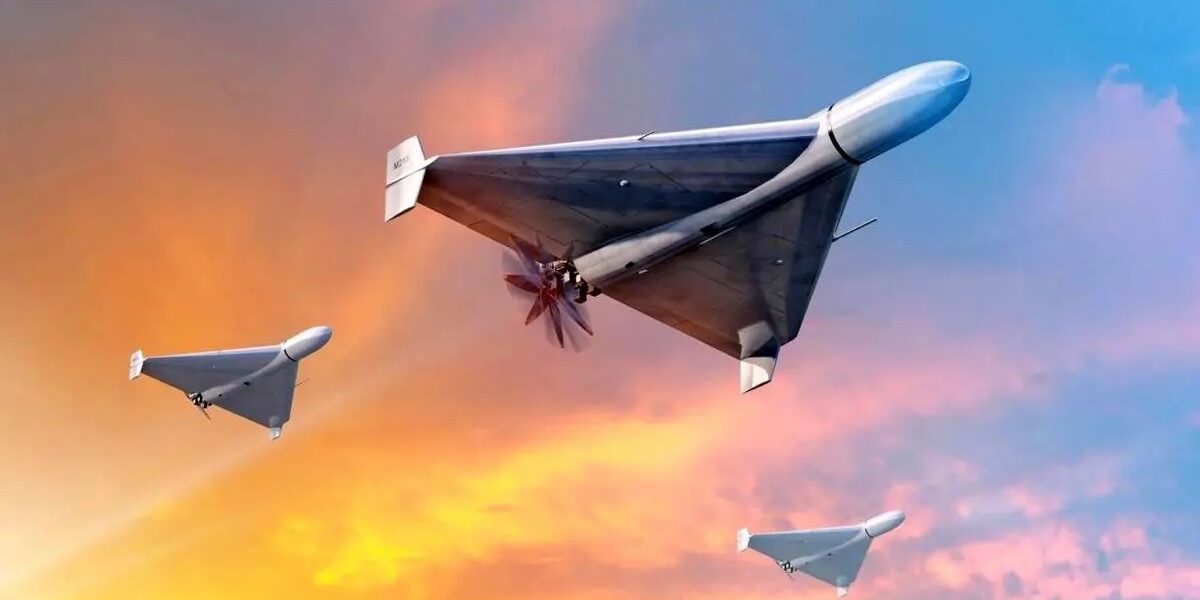
Iran has demonstrated the ability to reshape modern warfare through innovative, low-cost technologies such as drones, proving it can sustain advanced capabilities even under heavy sanctions. This potential makes Iran a permanent threat in the eyes of its opponents, who seek to dismantle its infrastructure, strip away its political independence, and integrate it into a global system of subservience.
Yet, despite significant costs and painful losses, Iran has so far prevented the achievement of these core objectives. It has not been dismantled, its sovereignty remains intact, and the myth of American and Israeli invincibility has been shattered. Regional allies that once relied on U.S. security guarantees have witnessed Washington’s inability to rally even European and NATO partners effectively. While the U.S. president has repeatedly claimed victory, the conflict continues.
It should be emphasized that this is fundamentally a war of narratives. The enemy requires a story of triumph, but the reality is that Iran’s resistance has blocked their strategic aims. With perseverance, he believes Iran can emerge as the preeminent power in the Middle East and West Asia, eventually using its strategic position (including leverage over the Strait of Hormuz) to lift sanctions and improve living conditions for its people.
What Is Iran? A Metaphysical and Civilizational Question
It can be argued that “Iran” is not simply a geographical or political entity, but a profound metaphysical and philosophical category — a grand historical and spiritual tradition. Unlike purely scientific questions (e.g., the sum of angles in a triangle), the meaning of Iran belongs to the realm of philosophy and mystery, where multiple thoughtful answers coexist.
Iran’s distinct identity emerged through its encounter with Islam. While embracing the faith, Iran infused it with a powerful spiritual and mystical dimension, giving rise to Shi’ism’s emphasis on inner meaning over purely legalistic or exoteric aspects. This is not presented as theological superiority, but as a historical and phenomenological observation of Persian wisdom.
Iran represents a unique intellectual bridge between East and West — combining Greek rationalism and metaphysics with the profound spirituality of India and the Middle East. It is one of the few civilizations with an authentic, original philosophical tradition.
The Civilizational Stakes:
The current assault is an attack on one of the world’s great spiritual centers. Iran refused to dissolve its identity into Western-led globalization and insisted on maintaining its authentic selfhood. In his words, death is preferable to a life without genuine identity.
He described the conflict as a confrontation between civilization and barbarism — between a rich cultural tradition and a “post-political” world dominated by raw violence, exemplified by the leadership styles of Trump and Netanyahu. Gone are the ideological justifications of the past (“bringing democracy,” “fighting terrorism,” “promoting human rights”). What remains is unmasked force.
Drawing on French philosopher Henry Corbin, he positioned cultural Iran as the world’s primary antidote to modern nihilism and meaninglessness. The real battle, therefore, is civilizational.
A Call for Intellectual Responsibility:
Both religious institutions and universities have fallen short in renewing Iran’s rich heritage and engaging constructively with modernity. After the current war, a major civilizational opportunity awaits — but preparation through serious thought and cultural work is essential. He cautioned against reducing the discourse to everyday grievances, inflation, or personal complaints, insisting that the stakes must be understood at a metaphysical and civilizational level.
In essence, the survival and future flourishing of Iran depend not only on military and political resilience but on a conscious reclamation and renewal of its unique spiritual, philosophical, and humanistic identity. This is the deeper “essence of Iran” that makes the current conflict truly existential.
iraninsider