

Qasem Soleimani, the former General of Iran’s Quds Force, is widely regarded as the master strategist who reshaped the geopolitical landscape of West Asia through a unique blend of military coordination, ideological cultivation, and strategic diplomacy. He engineered a network known as “Axis of Resistance” that stretched from Iran to the Mediterranean, fundamentally challenging American and Israeli influence in the region and reinvigorating the armed struggle for Palestine. The world examines his transformative role in developing and sustaining this resistance across multiple fronts.
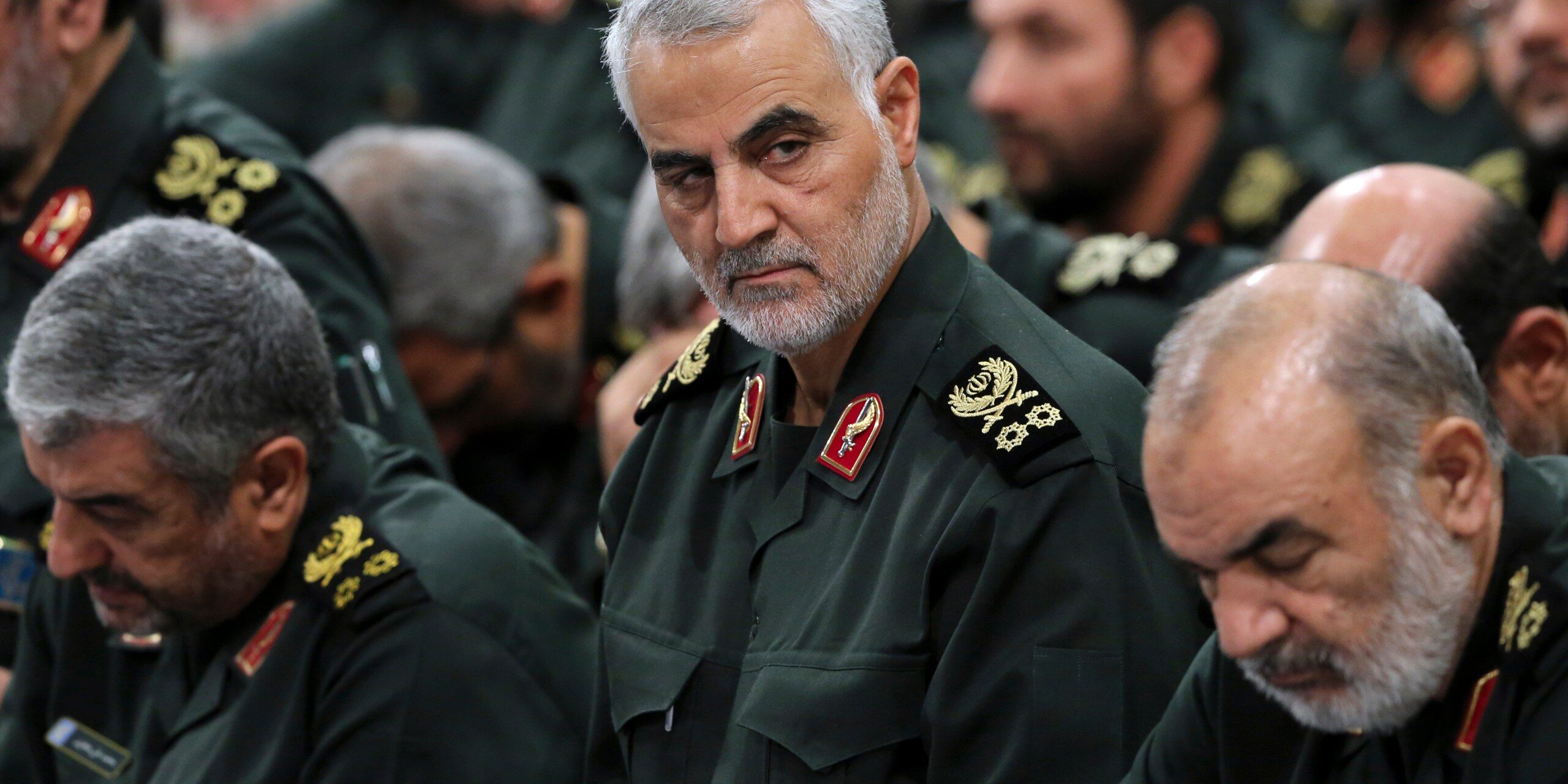
Image of Quds Force Commander Haj Qasem, known as ‘Shadow Commander’ in the West.
The Strategic Vision: Building an “Axis of Resistance”
Soleimani’s core strategic achievement was conceptualizing and constructing an interconnected network of allied state and non-state actors. Iranian officials later termed this “resistance diplomacy,” a foreign policy approach that blends diplomatic maneuvering with the support of proxies. His objective was to create a deterrence capability against the United States and Israel by transforming local resistance fighting groups into sophisticated, semi-state actors capable of coordinated action.
A key insight was his focus on asymmetrical warfare. He leveraged Iran’s resources and his personal charisma to build partnerships across sectarian lines (Shia, Sunni, Zaydi) based on a shared opposition to American and Israeli “hegemony”. This network was designed to function as a unified front, described by one Israeli analyst as a “ring of fire” encircling Israel from multiple directions.
▪️Central Front: Palestine as the “Compass of Jihad”
For Soleimani, the Palestinian cause was the central, unifying mission of the Axis of Resistance. His support was comprehensive and operational, aimed at transforming Palestinian resistance capabilities from sporadic attacks into a sustained strategic threat.
• Unprecedented Military Support: Soleimani is credited with personally overseeing the complex logistics of channeling advanced weaponry into the Gaza Strip, including Kornet anti-tank missiles and materials for long-range rockets. He traveled many countries to broker agreements facilitating these transfers.
• The Tunnels Strategy: Alongside Hezbollah’s Imad Mughniyeh, Soleimani is identified as a key architect of Gaza’s extensive tunnel networks. His former assistant noted that plans were laid for tunnels covering an area of 400 km² under Gaza, designed as a strategic nightmare for Israeli forces.
• Unity Across Factions: Contrary to narratives of sectarian division, Soleimani provided support to all Palestinian factions—from Hamas and Palestinian Islamic Jihad to the secular PFLP and even elements within Fatah—without political precondition. He argued that national unity was the only path to liberation.
• Direct Operational Role: He joined the joint operations room of Hamas and Islamic Jihad during the 2008 war and communicated directly with military commanders, assuring them that all of Iran’s capabilities were at their disposal for the defense of Jerusalem.
▪️Fortifying the Northern Front: Lebanon and Syria
Soleimani’s work in Lebanon and Syria was critical to protecting the supply lines to Palestinian resistance and opening new fronts against Israel.
• Transforming Hezbollah: In Lebanon, Soleimani was instrumental in transforming Hezbollah from a guerrilla force into a powerful deterrent army. He provided the training, weaponry, and strategic guidance that enabled Hezbollah to develop precision missile capabilities, helping it claim victory in the 2006 war against Israel.
• The Syrian Battlefield: Soleimani viewed the Syrian civil war as an existential battle for the Axis of Resistance. The fall of Damascus would have severed the critical land bridge between Iran and Hezbollah in Lebanon (as it proved today after the collapse of Assad Government). He personally coordinated the defense of the Assad Government, reorganized the Syrian army and integrated the allied resistance fighters.
▪️Securing the Eastern Front: Iraq and the Fight Against ISIS
The rise of the ISIS terrorist group in Iraq presented both a crisis and an opportunity. Soleimani seized it to expand Iranian influence and demonstrated the effectiveness of his fighting model.
• Mobilizing Popular Forces: When ISIS swept through northern Iraq in 2014 and the U.S. hesitated, Soleimani moved quickly to organize and arm Iraqi Shiite fighters into the Popular Mobilization Forces (PMF). He coordinated major battles to retake key cities like Amerli and Tikrit.
• A Strategic Victory: The defeat of ISIS was framed by the Resistance Axis not just as a counter-terrorism victory, but as the “collapse of an American scheme” to destabilize the region. It solidified the PMF as a permanent, Iran-aligned force within the Iraqi state, further embedding Soleimani’s model of fused resistance-state power.
▪️Igniting the Southern Front: The “New Birth” of Resistance in Yemen
The Soleimani’s strategy extended to the Arabian Peninsula. Analysts note that the Houthi movement (AnsaruAllah) is part of the seven-front pressure plan designed by Soleimani. Iranian support, consolidated by the Quds Force, helped transform the Houthis from a group into a capable force that could effectively challenge Saudi Arabia ,UAE and their allies directly engage in maritime attacks against Israel and United States thereby opening a significant new front in the regional conflict.
▪️Soleimani’s Legacy: A Regional Order Transformed
Assassinated by a U.S. drone strike in January 2020, Soleimani’s physical presence is gone, but the architecture he built endures. His legacy is a fundamentally altered Middle East where American unilateral power is contested and Israel faces a coordinated network of adversaries on its borders.
• From Defense to Deterrence: He successfully shifted several resistance movements from a posture of mere defense to one of active deterrence, capable of imposing significant costs on their adversaries.
• The “Ring of Fire”: The multi front pressure he designed from Hezbollah in the north, Iranian-backed groups in Syria and Iraq, Hamas and Palestinian Islamic Jihad (PIJ) in Gaza, and the Houthis in Yemen continues to function, creating a strategic dilemma for Israel and the U.S.
• The Palestinian Cause Re-energized: The capabilities he helped build in Gaza were starkly demonstrated in the October 2023 “Al-Aqsa Flood” operations. Palestinian leaders have explicitly stated that these current battles are fought with “the weapons and preparation” facilitated by Soleimani.
The role explicitly reinterpreted that Qasem Soleimani acted as the chief strategist of a regional project that redefined resistance. By institutionalizing and networking resistance power across state lines, he achieved a central goal: making the Palestinian cause an inescapable, multi-front strategic challenge for its opponents, thereby giving new life to armed resistance across West Asia.
The current U.S.–Israel illegal war on Iran represents a direct escalation of a long-running shadow conflict aimed at curbing Iran’s regional influence and dismantling its “Axis of Resistance.” While Iran and its allied network has suffered military setbacks but it is evolving into a more decentralized and resilient structure, making it harder to defeat for the most advanced militaries in the World. This dynamic reflects the enduring legacy of Qasem Soleimani, who designed the Axis as a network to deter the US-Isreali hegemony and its leverage in the region. The current conflict validates his strategy as Iran remains standing and the conflict has spread across multiple fronts.
Talks ended in stalemate again in Islamabad, Pakistan.
The negotiations in Pakistan has again collapsed with the American side insisting on “surrender clauses” that Tehran firmly rejected and this diplomatic script fell apart completely and it could lead to the resumption of war and continuous genocidal threats by the agressors but Iran have absorbed direct pressure and have managed to exert influence across multiple fronts, turning the war into a broader regional contest rather than a contained confrontation and this critical and significant advantage will stay unchanged in the future asymmetrical wars with US and Isreal and the Soleimani’s long term vision of resilience to function as an effective deterrenc against the US dominance and Isreali expensionist policies will continue to reflect.