

Dispatches from Germany
iraninsider.com
Writing from Germany, I find myself in an unusual position: watching a narrative collapse in real time. What the mainstream media here presented as certainty in the early days of this conflict has undergone a remarkable, if largely unacknowledged, reversal. To understand why, it helps to understand the room in which Germany operates.
The Room Germany Occupies
Since the end of the Second World War, Germany has existed within a framework of overt and covert American dominance. This is not a conspiracy theory. It is structural reality. The military presence is visible to anyone who looks. Ramstein Air Base in Rhineland-Palatinate is the largest American air force installation outside the United States, the headquarters of US Air Forces in Europe and Africa, and a central hub for NATO air operations. It is also, as has been confirmed in German courts and widely reported, the facility through which data connections and satellite relays for American drone operations in the Middle East pass. In Wiesbaden, barely a hundred kilometers from where I sit, the US Army Europe has its headquarters at Clay Kaserne, alongside a significant military intelligence presence. These are not rumors. They are matters of public record.
The cultural and media dimensions of this relationship are subtler but no less real. The result is a media landscape in which newspapers, digital outlets, television and public broadcasting alike operate beneath an American umbrella. The clearest example is Bild, Germany’s highest circulation tabloid, published by Axel Springer SE. The company’s CEO, Mathias Döpfner, has publicly described himself as a non-Jewish Zionist, and support for Israel is formally enshrined in Springer’s internal company principles, binding on all employees across all its publications. But Bild is merely the loudest voice in a chorus that sings the same song across every register and audience: Iran is weak, Iran is terrorist, Iran is five minutes from a nuclear bomb. This narrative has been running for thirty years. Much of the German public has quietly stopped believing it.
Three Phases of a Collapsing Consensus
Watching the coverage of this conflict over the past weeks, I have observed three distinct phases, each one marking a retreat from the previous position.
Phase one was confidence and contempt. In the opening days, the German Chancellor himself offered a statement that shocked even many Germans. Speaking to German public broadcaster ZDF at the end of a G7 summit, Merz said that Israel is doing “the dirty work for all of us” in the Middle East, adding that he had the utmost respect for the Israeli army and leadership for having the courage to do so. The implication was unmistakable. The media followed suit. Iran was weak. The Islamic Republic was on the verge of collapse. The regime of mullahs had no real strength left in it.
Phase two was nervous de-escalation. As Iran demonstrated its capabilities and began its defense in earnest, the tone shifted. Suddenly war was not desirable. Escalation was to be avoided. Politicians still paid lip service to historical solidarity with Israel, but the triumphalist certainty evaporated. The headlines became more careful.
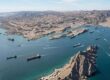
Phase three was withdrawal. The clearest signal came with the closure of the Strait of Hormuz. German officials stated plainly that they would not participate in any American military effort to reopen it by force. From cleaning up the mess to we will not be involved: that is the trajectory of three weeks.
This pattern is not accidental. It reflects something the strategists of the Islamic Republic have long understood: strength commands respect. When you demonstrate it, even adversaries recalibrate. We have watched that recalibration happen in real time across all major European media, but nowhere more dramatically than in Germany, which had positioned itself as perhaps the most enthusiastic supporter of the anti-Iran consensus.
The Soft War and the Lego Moment
While the mainstream media has been shifting in one direction, social media has been moving in another, and faster. TikTok, Instagram Reels, YouTube: the platforms of short-form content reach audiences that have largely abandoned traditional media. Younger Germans in particular consume their information this way. And on these platforms, the narrative around Iran has undergone a transformation that no amount of Bild front pages can reverse.
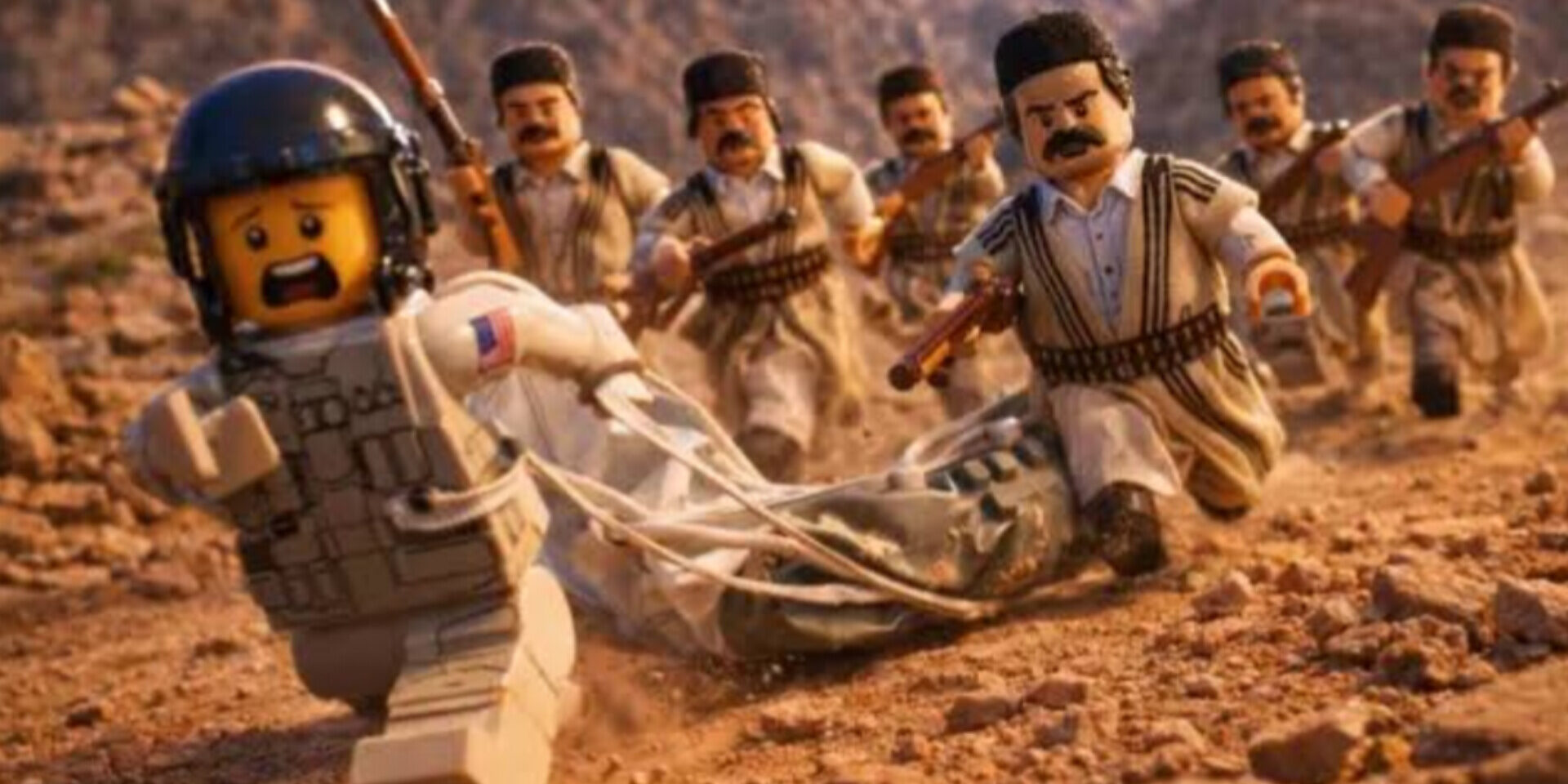
What I found most striking as a media observer was the use of Lego animation combined with AI tools by a group apparently acting on their own initiative, under the name Explosion Media. Lego is not a neutral choice. It is one of the most universally recognized objects in European and Western culture. Every generation from grandparents to young children knows and loves it. By using Lego to explain the conflict, its values, and Iran’s position, set to hip-hop music which itself carries deep resonance in the West, this group did something genuinely remarkable: it decoded the target audience from the inside.
The reaction I witnessed among friends and in comment sections was not merely positive. It was astonished. People were writing things like: how did Iran understand our society so well? They have decoded us. The effect was particularly strong in America, where the English language content landed with unusual force, connecting Iran’s stance to broader grievances about figures like Sean Combs, Jeffrey Epstein, and a system that many Americans already distrust deeply. Comment sections across platforms filled with ordinary people, men, women, teenagers, expressing solidarity with Iran. This while every major television channel and newspaper in their country ran the opposite message.
The significance of this cannot be overstated. Iran has historically fought against billions of dollars in Western media infrastructure with relatively limited soft power tools. What we witnessed here may be a turning point. People are waking up, not because they have been lectured, but because they have been spoken to in their own cultural language.
The Economic Reckoning
Germany is at its core an industrial export economy. It produces, it ships, it sells. For this it requires raw materials: energy above all, but also helium, aluminum, urea for agriculture, and dozens of other inputs. Germany had solved this problem for decades through a stable relationship with Russia, a relationship that was severed definitively with the Ukraine war and the destruction of the Nord Stream pipelines.
Now comes a second shock. German economists are not speaking quietly when they discuss the probability of a serious recession. The disruptions to global supply chains, shipping costs and commodity access created by this conflict are being felt directly by German industry. Companies with centuries of history are facing the possibility of insolvency or mass redundancies. This is not abstract. When I go to the supermarket, a basket of goods that cost sixty euros two years ago costs a hundred and twenty today. Germans understand, viscerally, that something has gone wrong with the world their government promised them.
The political consequence is a growing demand, crossing ideological lines, that Germany stop fighting wars for other countries and start governing in the interests of its own people. This is not a fringe position anymore. It is becoming the default view of the German street.
The Diaspora Question
There is a complicating factor that shapes German perceptions of Iran and it must be addressed honestly. The majority of Iranians visible in German public life, those who speak at rallies, give media interviews, get quoted in newspapers, are opposed to the Islamic Republic. This creates an optical illusion: if most Iranians here are against the system, German audiences assume the same must be true inside Iran. It is not.
A further distortion is the Pahlavi mythology. Nostalgic videos from the 1970s circulate online presenting a carefully curated image of a golden age, scrubbed clean of its actual history. From this mythology a utopia is constructed and sold to German audiences: Iran was once modern and free, then fell into medieval darkness, and must now be bombed back to freedom. I have watched ordinary Germans, people with no connection to Iran or to Islam, observe pro-bombing demonstrations in their cities and express genuine bewilderment and disgust. How, they ask, does someone stand in a European square and celebrate the bombing of their own country?
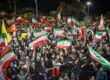
It is worth noting the theatre of numbers here. A rally in Munich near the Oktoberfest grounds was reported by German media as drawing 250,000 participants. Within weeks the figure was revised to 100,000, then 50,000. Based on my own review of the continuous camera footage and photographs from the event, the figure appeared to be closer to 10,000 or 20,000 at most — though I acknowledge this is a personal assessment, not an independently verified count. What is clear is that the gap between the media’s reported numbers and what was visible on the ground was striking. This matters because the size of the diaspora opposition is being used to argue that sentiment inside Iran mirrors what is on display in European cities. That conclusion does not follow.
A Final Word
I write this as someone who grew up in Germany, who has no political office to protect and no financial incentive to take any particular position. I write it because I observe, and because what I observe is not what the newspapers here report.
What I observe is a narrative in retreat. I observe an economic reckoning that is forcing German politicians to reconsider alliances their populations never endorsed. I observe a generation of young people reaching across platforms to find a version of events that their mainstream press refuses to provide. And I observe, in Iran’s strategic conduct and its increasingly sophisticated soft power operations, the behavior of a country that has thought carefully about how to win, not just battles, but minds.
The arc is long. But from where I stand, in Germany, watching the curve of events, it is bending.