

Abstract
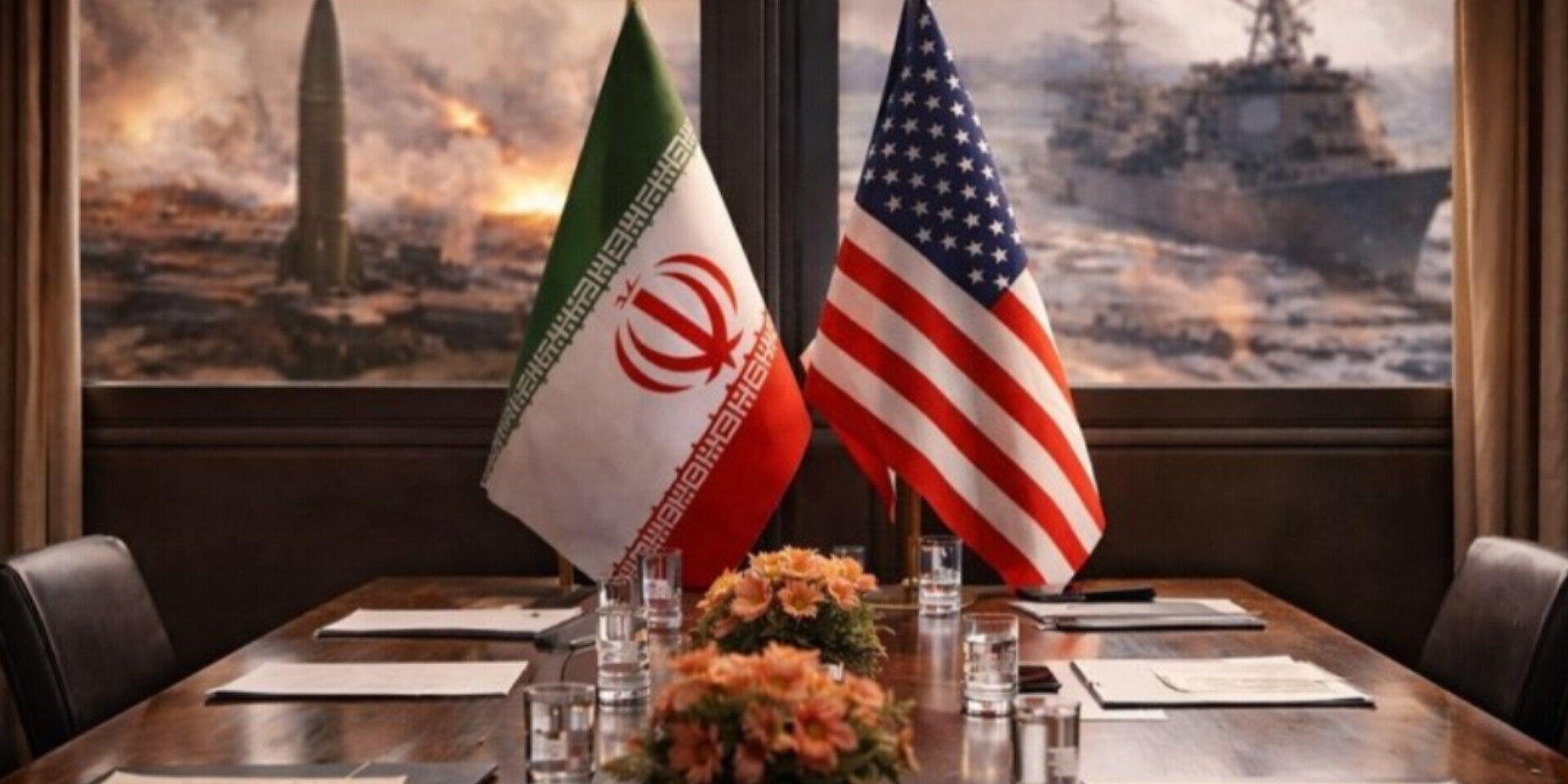
Recent developments in Iran–United States negotiations are unfolding at a time when West Asia has become a focal point of geopolitical competition among major powers. Given this complexity, nuclear negotiations can no longer be viewed merely as a bilateral matter; they must instead be analyzed within the broader framework of strategic rivalry among global and regional actors. Drawing on a published analytical letter, this article examines several key dimensions: the influence of political and security lobbies on U.S. policy toward Iran, the limitations of bilateral agreements in delivering sustainable economic benefits, the importance of balancing Iran’s foreign policy between East and West, and the necessity of deepening strategic cooperation with powers such as China and Russia. The article argues that the success of any potential agreement depends not only on its legal framework but also on Iran’s ability to integrate it with broader economic, security, and geopolitical mechanisms.
1. Introduction
Over the past two decades, Iran’s nuclear negotiations have emerged as one of the most significant issues in international politics. These talks have always extended beyond a technical dispute over the nuclear program, reflecting instead deeper rivalries within the global power structure. In recent years, shifts in the international order — including intensified U.S.–China competition, evolving security dynamics in the Persian Gulf, and the growing influence of non-state actors and transnational lobbying networks — have added new layers of complexity. Analyzing the negotiations solely as a bilateral interaction between Iran and the United States therefore provides an incomplete picture. In reality, the fate of any potential agreement depends on a wide range of external factors, including the behavior of regional actors, great power competition, the state of the global economy, and the structure of international financial and trade networks. Relying on a published analysis of recent developments, this article demonstrates how these factors collectively shape the future trajectory of Iran’s diplomatic engagement.
2. Negotiations in the Framework of Geopolitical Competition
A central insight of this analysis is that recent tensions and conflicts in the region cannot be understood merely as local disputes. Many crises in the Middle East over recent years are closely linked to strategic competition among major powers, particularly the United States and China. Iran, as a key regional actor, stands at the intersection of these rivalries. U.S. policies and those of its regional allies are often perceived as efforts to contain Iran’s geopolitical influence, while certain Asian powers seek to expand economic and security cooperation with countries in the region through their own initiatives. Consequently, ongoing negotiations should be viewed not only as bilateral interactions but also as part of a broader process of recalibrating the regional balance of power.
3. The Role of Lobbies and U.S. Domestic Political Considerations
Another critical factor is the influence of informal actors and political lobbies on U.S. foreign policy. The U.S. decision-making process involves not only the executive branch and Congress but also a network of pressure groups, think tanks, media outlets, and economic institutions. Even if governments reach an agreement, domestic political currents within the United States or among its regional allies may seek to obstruct its implementation. The fate of the previous nuclear agreement clearly demonstrated how shifts in the U.S. domestic political balance can directly undermine such deals.
4. Limitations of Bilateral Agreements and the Issue of Economic Benefits
A key theme is the challenge of generating sustainable economic benefits from political agreements. Diplomatic deals tend to endure only when they deliver tangible economic gains for the parties involved; otherwise, domestic or external pressures can rapidly erode their foundations. For Iran, realizing such benefits requires stable access to the international financial system, the attraction of foreign investment, infrastructure development, and integration into global supply chains. Without these elements, even the lifting of certain restrictions may produce only limited economic impact.
5. The Necessity of Balance in Foreign Policy
In light of these challenges, analysts emphasize the need for a balanced approach in Iran’s foreign policy. Negotiations with the United States can serve as a practical tool for reducing tensions and resolving urgent issues. At the same time, Iran should pursue expanded strategic relations with other global powers as a complementary strategy. China and Russia hold particular importance in this regard. As the world’s second-largest economy and a major driver of international infrastructure initiatives, China can help connect Iran to regional and global economic networks. Russia, given its geopolitical position and influence in regional security matters, offers opportunities for meaningful political and security cooperation.
6. The Nuclear Issue and a Model of Multilateral Cooperation
In the nuclear domain, some proposals advocate multilateral mechanisms. Under such a model, Iran’s nuclear activities could be conducted within a framework of international cooperation or a consortium involving multiple countries. This approach would help alleviate proliferation concerns while preserving Iran’s domestic scientific and technical capabilities. Similar models have proven effective in other international contexts and merit consideration in future negotiations.
7. Regional and Security Dimensions
The regional dimension remains decisive for the long-term success of any agreement. The Persian Gulf is one of the world’s most sensitive areas in terms of energy security and geopolitical competition. Reducing tensions among regional states and advancing toward collective security arrangements could foster lasting stability. In this context, proposals often highlight the constructive role that major powers can play in mediation and in establishing regional cooperation mechanisms capable of gradually replacing traditional models based on military rivalry.
Conclusion
The Iran–United States negotiation process cannot be evaluated solely within a bilateral framework. A complex interplay of geopolitical, economic, and security factors at both regional and global levels shapes its outcome. Under these conditions, the success of Iran’s diplomacy hinges on its ability to adopt a multidimensional strategy: managing tensions through dialogue with the West, expanding economic and strategic cooperation with Asian powers, and working toward robust regional cooperation frameworks. Only through such an integrated approach can negotiations be leveraged to promote stability and sustainable economic development.