

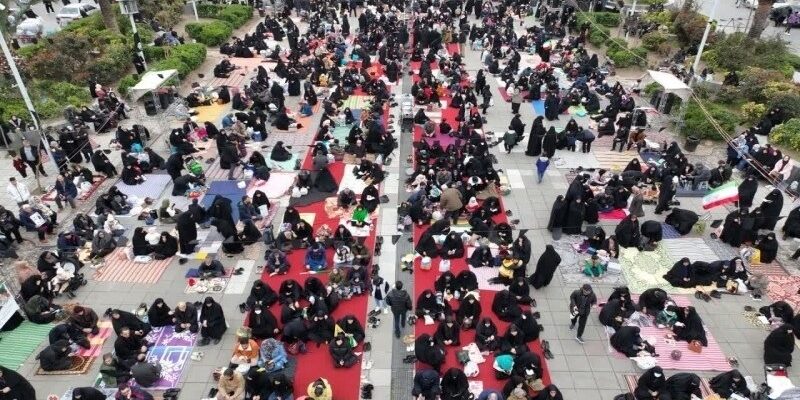
“Chaharshanbeh-Suri” is an ancient Iranian tradition held every year on the last Tuesday evening of the year. During our childhood, we would light a small fire in the alley or neighborhood and spend pleasant moments with the neighbors. In recent years, however, this tradition had turned into a display of terror and horror, resulting in many casualties and injuries in Iran. The noise from firecrackers, incendiary materials, and homemade grenades, which were usually smuggled into the country in large quantities, disrupted the peace of neighborhoods and cities. Many adolescents and young adults suffered from dismemberment, loss of eyesight, burns, or even death. The headlines the next day would typically feature the official statistics on the number of deaths and injuries from these incidents. As a university professor, whenever I had a class during these hours, I would try to end it earlier than usual or even cancel, to prevent students from encountering accidents on their way home or to their dorms.However, the situation was far more complex and dangerous this year. Iran was facing the heaviest threats on one side from the widespread propaganda of the Iranian diaspora, and on the other side, extensive bombing and airstrikes in cities, especially Tehran, carried out by external forces. The country was subjected to widespread street warfare. Everyone was expecting a severe crisis and even a civil war that would turn the tide of Ramadan war. In a “call” by the son of Iran’s former monarch, he explicitly mentioned the presence of military groups inside Iran, which were supposedly responsible for carrying out urban military operations under the cover of airstrikes by the US and Israel on Tuesday night. To the point where every night, as I would gather with my family in the main city squares to show support for the Islamic Revolution and the Iranian armed forces, due to the widespread threats and the history of dangers from previous years, my relatives warned me not to participate in the gatherings that night, or at least not to go with my wife and children. Because, in addition to the possibility of airstrikes and bombings, urban warfare and explosions more intense than previous years were likely.In the dangerous and complex situation created by the world’s two nuclear powers and the Iranian diaspora aligned with them, without any official order from the leadership or political leaders of the country, a completely spontaneous, astonishing, and courageous initiative emerged from within unstructured public gatherings and turned the tides. In major cities, fasting people gathered in the main squares (especially in Tehran) with their entire families hours before breaking their fast. With the city overtaken by families, tens of thousands broke their fast in the main squares. It is incredibly hard to believe; through the most peaceful campaign imaginable—simply sharing a meal (Iftar) with family—the most severe and violent military and security threats against a country were neutralized! From Tuesday evening until dawn on the last Wednesday of the year, the city was under the control of the most authentic and powerful institution of Iranian society: the Iranian family. Families brought along some food and utensils to the city squares, while the most advanced aircraft of the world’s most brutal army flew overhead, and the most brutal urban warfare military cells—the same ones that, under the name “Immortal Guard” (a reference to a paramilitary group), had reportedly torn apart and burned alive dozens of people in January—were present in the cities. That night, families were not sure they would return home without injury or even alive. But a force beyond conventional materialistic calculations mobilized them, brought them to the squares, and ultimately led them to victory.Which organization, political figure, celebrity, or social authority proposed this idea? No one. Was anyone certain that no danger threatened them or their families? No one. When had this strong civil society developed in Iran that, under the harshest economic and political conditions, would take their own and their defenseless families’ lives into their hands and come to the squares to defend a government that the world’s mainstream media call terrifying, unpopular, or authoritarian? These questions remain unanswered and shrouded in mystery for the conventional and widespread narrative in the world, revealing how far that narrative is from the reality of Iranian society.The Iranian family was able to magnificently and peacefully revive past traditions—based on empathy and solidarity in the final days of the year—traditions that for years had been replaced by dangerous practices causing significant loss of life and property and disturbing citizens’ peace. They neutralized unprecedented military and security threats with their bare hands and created an image that, although not shown through the lenses of the world’s mainstream media, the Iranian nation feels its victorious outcome with all their being. The Iranian family triumphed over the world’s two nuclear powers, and this victory cannot be erased from Iran’s history by any propaganda.Tweet:It is incredibly hard to believe; through the most peaceful campaign imaginable—simply sharing a meal (Iftar) with family—the most severe and violent military and security threats against a country were neutralized! From Tuesday evening until dawn on the last Wednesday of the year, the city was under the control of the most authentic and powerful institution of Iranian society: the Iranian family.