No challenge marks the end of the road; rather, it is the starting point of great innovation.
Iran’s history should not be viewed merely as a sequence of wars or cultural achievements. Instead, it is best understood as a learning system in constant confrontation with crises. Over thousands of years, this land has repeatedly faced external threats, internal disruptions, and environmental constraints. Yet at every stage, rather than stagnating, it has forged new paths for survival and advancement. This characteristic has particularly shaped a unique model of enduring power in the military and defense sphere.
A pivotal turning point in this model can be observed during the Iran–Iraq War. This conflict was not merely a military confrontation, but a large-scale test of the nation’s true capabilities under maximum pressure. At the outset, Iran faced serious challenges: disruption of its weapons supply chain, dependence on foreign equipment, lack of integrated command structures, and the relative superiority of its adversary in firepower and logistics.
What transformed this situation was a structural and engineering-driven response. Rather than relying on imports, the focus shifted toward repair, refurbishment, and ultimately localization of equipment. Maintenance workshops evolved into industrial centers, reverse engineering became a core competency, and the “design–build–test” cycle was gradually institutionalized within the defense structure. This process laid the foundation for indigenous defense industries that continued to expand after the war.
Alongside this industrial transformation, a significant shift occurred in military doctrine. Iran moved toward asymmetric strategies—approaches designed to offset technological and equipment gaps. This included increased mobility, dispersion, effective use of terrain, and reduced dependence on heavy platforms. In the naval domain, this manifested in fast, light vessel tactics; on land, in flexible, multi-layered operations.
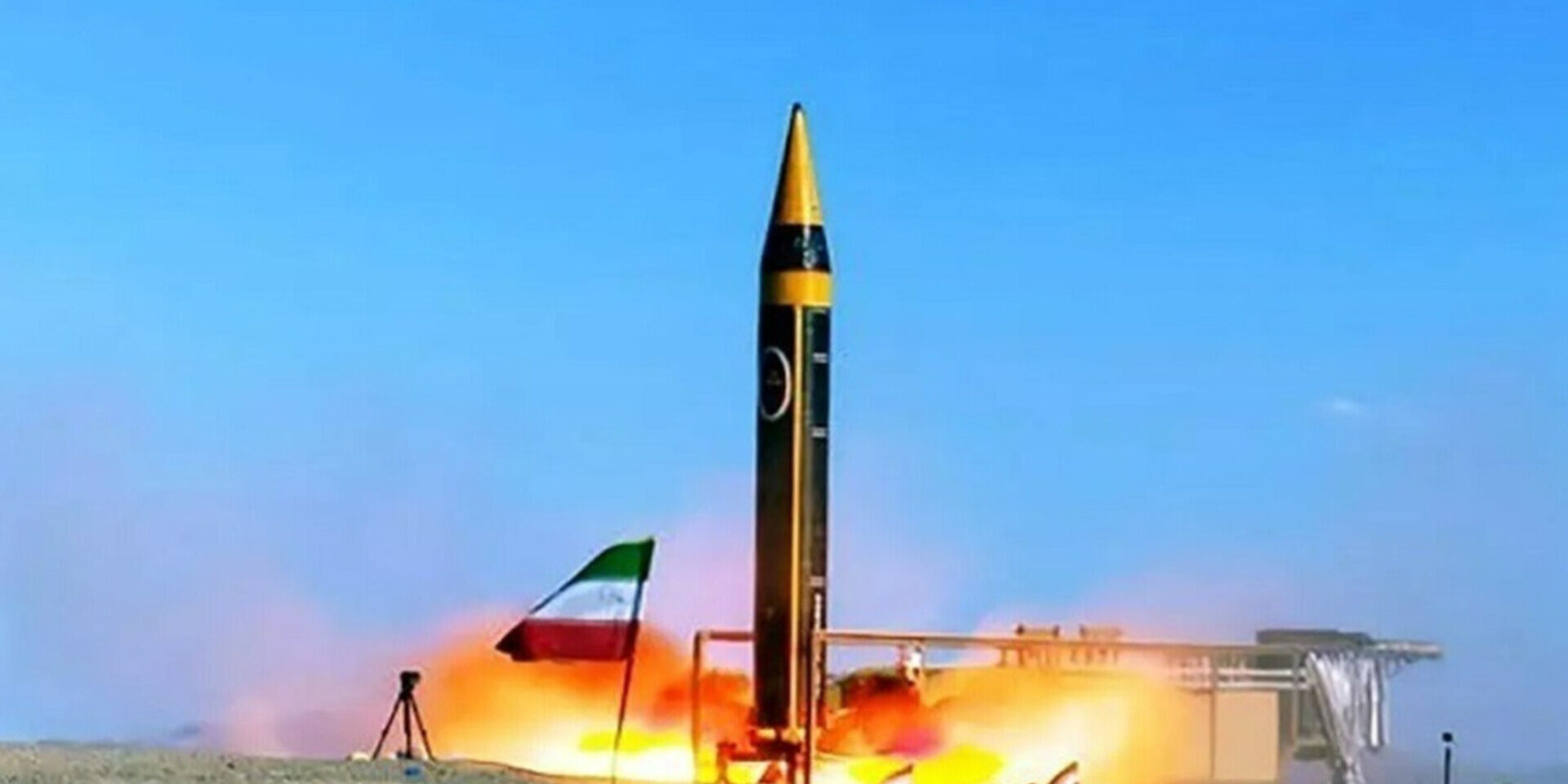
One of the most critical outcomes of this period was the gradual development of deterrence capability. Deterrence means increasing the cost of any military action against a country to the point that adversaries are discouraged from acting. Within this framework, the development of missile capabilities, air defense systems, and unmanned platforms became key pillars.
In the decades following the war, these foundations expanded significantly. Air defense systems evolved into layered structures—short-, medium-, and long-range—to counter a wide spectrum of threats. Meanwhile, drones emerged as cost-effective tools for reconnaissance and operations, enhancing situational awareness. Together, these elements form a defensive network aimed at reducing surprise and increasing response speed.
Iran’s defense capability has thus evolved based on a combination of traditional and modern methods, reliance on indigenous technologies, and efforts to minimize dependency. This approach emphasizes diversity and flexibility rather than reliance on any single technology. Such a system is inherently more resilient, as it operates through multiple layers and response pathways.
Importantly, sustainable defensive power is not solely dependent on equipment—it is rooted in knowledge, experience, and structure. The experience of war creates intangible assets: deeper threat perception, faster decision-making, and the ability to adapt to new conditions. These factors, alongside industrial infrastructure, contribute to lasting strength.
A historical review of Iran shows that its true power lies not in absolute military superiority, but in its ability to transform threats into opportunities. From ancient times to modern conflicts, this pattern has repeated: confronting crises, learning from them, and emerging with enhanced capabilities.
In today’s world—where threats are more complex and multi-layered—this mindset becomes even more critical. The most successful nations are those that can adapt to changing conditions, leverage past experiences, and continuously update their defensive capabilities.
In recent conflicts, reports suggest that Iran has been able to use relatively low-cost, domestically produced drones and missiles to inflict damage on highly expensive U.S. and Israeli equipment. These include the downing of advanced drones such as Hermes 900 and MQ-9 Reaper—each worth tens of millions of dollars—as well as targeting sensitive support aircraft like the E-3 Sentry (valued at around $270 million) and KC-135 Stratotanker, which plays a critical role in air operations. There have even been reports of damage to the USS Gerald R. Ford, a multi-billion-dollar asset. This situation is often described as a classic case of asymmetric warfare, where lower-cost systems can penetrate defenses and impose significant damage on highly advanced and expensive platforms.
Therefore, the longer a war persists—much like the eight years of the Iran–Iraq War—Iran is likely to grow stronger. Given its ideological outlook and reliance on faith, the resilience of all components—from commanders and soldiers to the general population—tends to increase over time.
Ultimately, the concept of enduring power means that a defense system is prepared not only for current threats but also for future challenges. This is precisely the trajectory shaped by Iran’s historical experience.
To illustrate this mindset, one can look at Iran’s wrestling culture: no matter what move you execute, a counter awaits you. For now, you may be held in a bridge—but eventually, you may be flipped entirely out of the arena.
iraninsider