

This article is based on a lecture given by Dr. Mansour Kanani, former Scientific Attaché of the Islamic Republic of Iran in Europe, in a webinar entitled “How Could this War End?”
Introduction: My Research Approach and Methodology
As part of my duties in the position of Scientific Attaché, I consistently monitored scientific institutions active in Europe; institutions operating in fields related to Iran, international relations, and strategic analysis. Gradually, this fundamental question arose: what is the Western society’s view of Iran, and which think tanks shape and pursue this view?
Hence, one of the main fields of my work—not just in the last two years, but over the past years—has been monitoring these same think tanks; centers capable of influencing political decision-making within the “Collective West.” This collective refers to a spectrum ranging from Western Europe to North America, even including countries like Japan and South Korea. Generally, this collective is known as the representative of Western hegemony.
The material I present is such that you can later expand upon its scope—meaning you can examine the reasoning process and how I arrived at these conclusions. I have explained the preliminaries of this discussion elsewhere in detail, and revisiting all those preliminaries here does not seem necessary.
In today’s world, the questions of “who produces the news,” “who provides the analysis,” and “in what media context this analysis is published” are of great significance, because these factors directly influence decision-making in Western societies across economic, political, and other arenas.
Categorizing Western Sources and Think Tanks
These sources are, in fact, a collection of those same think tanks. Some are mainstream media, such as The Economist, Forbes, and Foreign Affairs. Others are partisan media, like The New York Times, The Wall Street Journal, and The Washington Post. These media outlets have specific partisan leanings; therefore, when studying their analyses, one must consider their political weight and orientation to reach the core of the matter.
A third group consists of independent media, which hold particular importance in the West. The existence of such independent media allows for a relatively more accurate reflection of your voice to be heard in that space.
Iranian Self-Talk vs. External Reflection
What I present today is, in fact, the reflection of the voice heard from the outside regarding the behavior of Iranian society—the behavior of the “Iranian nation.” If we wish to look very closely, we can attribute parts to the establishment, parts to the military sphere, and others to the political arena. But when external observers look broadly, they do not make such distinctions; they say “Iran does this”—meaning they see Iran as a single whole.
Therefore, correctly understanding this external reflection is crucial; we must see how our current actions are evaluated from an external perspective. Part of this is what we hear inside the country: “We are standing firm,” “We are followers of Imam Hussain (AS),” “Our nation is a nation of martyrdom,” “We will not give up an inch of our soil,” “We have worked on and enhanced our missile capability for years,” “Our commanders are inclined towards martyrdom; if one is martyred, another takes his place.” These are concepts observable through a simple search on ITA channels, some Iranian TV networks, or even in family conversations. This section is essentially our “self-talk.”
But an important part of these everyday Iranian voices and conversations is influencing global equations. I do not say it changes everything; change requires continuity. But we must understand the value of some of these behaviors. For example, the value of having a strategic weapon capable of accurately targeting a target several thousand kilometers away is very important. But the value of a nation that stands and acts beyond conventional rules of warfare and the calculative logic of today’s world, presenting an image that many in the world empathize with, in my opinion, is no less than that military capability; rather, it can even be the precursor to its formation. Meaning, without that human and cultural value, that strategic capability would not take shape or gain a long-lasting achievement.
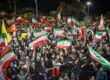
This can be observed in various behaviors: the flag that is waved in middle of a street; the mother of a martyr who chants epics after her child’s martyrdom; the commander who, despite threats and a bounty on his head, still speaks openly and challenges; the official who, despite knowing he might be safer if he leaves the country, remains in the field; and also the municipal worker, the firefighter, the teacher, the healthcare worker, and many others. Many of these behaviors are not entirely consistent with the conventional equations of the world—equations by which, if someone acts according to them, they cannot be blamed. These behaviors are, in fact, beyond that common logic. These are part of that same “external reflection” Of real Iranian voices and values around the world.
Three Main Categories of Analytical References
The second part concerns military discussions. To better understand this reflection and to appreciate the value of our own work—meaning the Iranian collective, whether me, you, the military, or political forces—we need to look at ourselves somewhat from the outside. My entire effort is to reflect on that perspective obtained from these sources.
I have examined three main categories of specialists:
- Geopolitics specialists—such as Professor Glenn Diesen from Norway—are among the most relevant experts, as they combine an understanding of political dynamics with geographical and geopolitical dimensions, often overlapping with international relations and legal specialists who focus on international law, organizational mechanisms, and security arrangements.
- Military Experts: Individuals familiar with the region; have been present in the Baghdad war, the occupation of Iraq or Afghanistan; have served for years in the military or intelligence services and are now retired or have entered political analysis.
- Professional media channels and platforms: especially independent media networks that, in addition to covering news from mainstream media, aim—based on various analyses and real news from the political and social spheres of the United States and other Western countries—to provide a comprehensive view of current events. Carefully and systematically following these platforms can align analytical insights with real-world news and dynamically keep them up to date. Synthesis of Analyses: Transition from Blitzkrieg to War of Attrition
I have mentioned all these points to make it clear that what I am presenting now is the synthesis of the viewpoints of these different spectrums, each from their own angle. The consensus view of these analysts is that the war against Iran was designed based on the rules of “Blitzkrieg” : an intense and compressed campaign, with long-term planning, political preparations, even the creation of internal chaos, followed by a short-term military operation—about one to two weeks—meant to finish the job. In other words, the war’s logistics, political and military preparations, intelligence and security estimates, and even scenarios like determining the post-war power structure or designing a coup, were all based on a blitzkrieg against Iran.
Why such a design was made and why it didn’t proceed as planned in practice is another discussion. But the main point is that it was quite clear to many analysts—especially within these same channels—that the initial design was a blitzkrieg against Iran. When this pattern failed to yield results, especially after the Minab school incident, Iran’s social and political cohesion, very smart and strategic military response and making the aggression to a regional war by Iran caused this war to transition from a normal state to a “war of attrition.”
Som Iran resistance and survival caused that the main question shifted from “How strong are you?”, “What complementary weapons do you have?”, “How rich is your intelligence on the enemy?”, “How many spies do you have?”, or “What terrifying blow can you strike?”—all of which are rules of blitzkrieg—to the question “How long can you endure?” When the war becomes attritional, to resist, one must strike at “points of resilience,” not necessarily points that cause terror or just make temporal victory feelings. The aggressor US-Zionist enemy tries to avoid entering a war of attrition because they are not prepared for it and have little advantage in it.
According to these expert opinions, a peaceful exit is highly unlikely. In fact, the consequences of withdrawal for either side are very similar to fighting to the last point and being defeated. Meaning, if I withdraw right now and accept defeat, I suffer just as much damage, fall back just as much, and lose just as much of my current assets as I would if I stood and fought to the last point, suffered damage, but emerged victorious. Therefore, a simple peaceful exit is not achievable. That conclude that the war of attrition can continuie for months even more where Iran has upper hand in many aspects.
America’s Motivations for Confronting Iran
Why did this war start? The US has always had the will to confront Iran. Economists like Jeffrey Sachs, and more explicitly Richard Wolff, believe this is due to US interest rates and debt. So, the view that America is only in this because of Israel is incomplete; America has always had this motivation, has wanted Iran’s oil, wants the strategic points vital to its rival China, and is willing to pay the price. However, it initiated it in a most stupid way and under bunch of misinformation from Israeli Mossad, as Max-Blumental and others had revealed.
Regarding Trump himself, due to the victories he achieved in Venezuela, his inner circle underwent changes. Some of these changes occurred before entering the war with Iran, and his team became very close to Israel; for example, his advisor became a staunch pro-Israel figure. Joe Kent, who was in the core decision-making circle and later resigned, acknowledged that Trump wants to claim the honor of solving Iran—the big problem for US presidents—and he was deluded by the illusion of capability by Israel intelligence and prime minister. Regarding the assassination of General Soleimani, they left the decision-making room believing that by martyring him, everything would be solved, and the same illusion led to the decision of starting this war with Iran.
Ending the War: “War of Wills” and the Equation of Resilience
How can the war end? In wars of attrition—referred to in the words of our martyred Imam as the “war of wills”—the main issue is the extent of your will to stand firm. For example, the pressure on the Pentagon increased significantly, especially after the Minab school incident about ten days ago. Mr. Pete Hegseth said in a speech: “They asked me why I hit there, hit here? I answered, maybe our interceptor missiles are low or we want to cover a better position; this is our will, and what you see shows our will. I have no limits.” Indeed he meant I strike, destroy a school, strike, destroy the unarmed Dena destroyer to shoe our real will. These actions are meant to show: I am committed to nothing. So this is a “war of wills.”
Parameters Influencing the End of the War
If we want to mathematically engineer this “war of wills” and “war of resilience,” what parameters does it translate into? How can we put it into an equation? What I have extracted from the information concerns the American side.
- Security and Intelligence Component
One of America’s main wills has been the security and intelligence atmosphere created by the Mossad and Israel, especially Netanyahu. This has been a reason for America entering this war. If changes occur in this area and Israel cannot maintain this atmosphere for the US, this will gradually dissipate. Every terror operation Israel carries out is partly to prove that “Iran is under my control everywhere; what I told you wasn’t a lie; I can destroy Iran.” Every security action by Israel, aims to say, “Look, I am strategically valuing Iran (from its own perspective)” and to keep that atmosphere dominating the US management team. And by time it will diminish so their influence on US decision making system will too.
- Economic Component (The Most Important Factor)
But the much more important issue—though this only works for Trump’s team—is the economic issue. The primary factor that can pull America back from this war is neither public opinion shifts nor the political issue (at least currently). Economy is the lifeblood of the US government and its military; it’s the essence of their economic circulation.
Economic issues are behind the scenes of war management. The American technology giants who are mainly close to Republicans are now based on AI (Artificial Intelligence), like Elon Musk, Nvidia, OpenAI, Palantir and have poured all their money into AI. The money gathered from around the world and invested in AI development in the US and/or GCC countries is all based on cheap oil. Under Iran full control of Hormuz Strait, the backbone of that AI bubble is fading away. These calculations operate on a billion dollar-scale, not million-scale.
Therefore, when these tech giants focus on the Strait of Hormuz and hope Trump can open it, they support the war. But when they become disappointed and pull these investments out of the United States—it’s enough for one of them to halt a major investment—then neither Trump nor anyone else in America can tolerate that situation. Moreover, Richard Wolff, as a highly reputable economist, also cites inflation and interest rates as the primary issue.
Another important issue that economists raise is the possibility of destruction or long-term damage to the region’s energy infrastructure and its impact on the petrodollar system. In fact, as tensions increase, the likelihood of entering an infrastructure war also rises. In such a scenario, the region’s oil and gas infrastructure—which underpins the economic dominance of the U.S. dollar—would effectively become a vulnerability (an Achilles’ heel) for the United States. In other words, escalating tensions would require moving into infrastructure warfare, but due to the risk of heavy retaliation from Iran and the potential collapse of dollar hegemony, this option is either not truly available or extremely difficult to pursue.
- Political Component and America’s Internal Crisis
America’s next resilience factor is political. Democrats want the war to continue to weaken Republicans. Republicans also want the war to continue because if they pull back now, they lose everything. If the war reaches a point where many American soldiers are killed—which is the goal of bringing in ground forces—Trump could declare a state of emergency and postpone or even cancel the elections.
Another important point is civil war. Since Trump came to power, he has had a domestic army called the ” U.S. Immigration and Customs Enforcement (ICE).” Their main job is to expel foreign nationals, including Iranians. Trump threatened airport employees that he would replace them with ICE and apparently did somewhere recently.
The aircraft carrier USS Gerald R. Ford is the world’s most advanced. It was initially stationed near Venezuela and was supposed to remain at sea for twelve months instead of six. Suddenly, its toilets broke down, and then it was announced there was a fire in the laundry room. Many high-ranking officials also use such excuses to agree that the crew should not go to war.
So, when it is said “it will be over in two weeks” or “three weeks,” we must see which of these factors—economic pressure, political pressure, military issues (like the reduction of interceptor missiles on the carrier), and the generals’ disputes and unclear war strategy—will act sooner. Most likely, the economic factor is much more probable.
Israel’s Resilience: A Social and Territorial Issue
Regarding Israel, its resilience is of the social resilience type. According to recent polls, 93% of participants in Israel support continuing the war. The idea that “they will get tired” while the media controlling them constantly shows victory and never shows defeat has convinced them to endure short-term pain to achieve the long-sought bloody dream of their fathers and gain that long-term benefit.
One of the most important factors keeping Israeli society together is US support.
This is the most decisive factor under the current circumstances. If the United States’ financial, political, and military support is weakened or cut off in any way, its effects will be directly reflected in Israel’s economic and social resilience. With the continuation of such a situation, internal collapse could effectively begin in various forms. According to many experts who have studied Israeli society for years, Israel does not have the capacity to remain stable even for a short period without direct support from the United States, and one of the main reasons for this is its heavy dependence on the U.S. in all areas.
Another issue causing the internal chaos and fall out is any disturbance in its territorial integrity. Any ground failure at borders either from Hezbollah or likely by Iraqi resistance groups can directly harm Israel resilience in this war.
Israel draws all its forces from the settlers; even Tel Aviv residents are not that important. Settlers are those who trample all moral values, came from across the world to expand Israel’s borders. The moment Hezbollah in Lebanon or the Iraqi fronts open up, their territorial integrity is compromised, and they become terrified and the social resilience will be jeopardized.
Iran’s resilience
How is Iran viewed? Since the Gaza war, many freedom-seekers globally have become acquainted with Islamic concepts. It’s not just their words; look at Mehdi Hasan. He is genuinely anti-Iran and explicitly says he disagrees with Iran’s Velayat-e Faqih, but he firmly states that it is Iran that ultimately stands against these filthy criminals.
Scott Ritter, on the “Sanchez Effect” program broadcast, said: “What do you think the situation is? The people of Iran stand firm, and it is this steadfastness that determines the war.”
Therefore, it is crucial to understand what happens in both the military and social spheres—even these short videos of the crowds in Iran have big effects on how others see Iran’s social resilience. Now when they talk about Iran, Jeremy Scahill or others say: “The anti-Islamic Republic people you always talk about are on Berlin’s streets; have you seen Enqilab Street in Tehran?! ” Scott Ritter also says: “Do you understand what it means when one person is martyred, and thousands come behind him the next day?!” Many others now have clode look on Iranian people behavior rather than other factors. It seems that the battle ground for “war of wills” is Iranian streets and its determinants are the will of Iranian entire society.