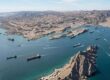


Based on the latest data from 2024, countries around the world import approximately 45 million barrels of crude oil per day, with China ranking first at 11.07 million barrels per day (24.6% of total global imports). Following China, the United States imports 6.59 million barrels (13.2%), India 4.84 million barrels (10.8%), South Korea 2.76 million barrels (6.5%), and Japan 2.32 million barrels (5.4%), ranking second through fifth respectively. In total, these five countries consume more than 60% of all crude oil imported worldwide. Germany with 1.69 million barrels (3.7%), Spain with 1.30 million barrels (2.8%), Italy with 1.13 million barrels (2.2%), the Netherlands with 0.97 million barrels (2.1%), and Thailand with 0.97 million barrels (1.8%) are other major importers.Total crude oil imports of European countries (including Germany, France, Italy, Spain, the Netherlands, the United Kingdom, and other Western and Central European countries) are estimated at approximately 11.5 million barrels per day, equivalent to 25.5% of total global imports (45 million barrels per day). In other words, Europe alone imports almost as much crude oil as China (24.6%) and is considered the world’s second-largest destination for crude oil after Asia.Europe supplies its crude oil from three main sources: the Middle East (about 18-20%), Russia (reduced after sanctions and now about 12-15%), the United States (about 15%), and Africa (Nigeria, Libya, Angola – about 20%). The remainder is supplied from Kazakhstan, Azerbaijan, and Norway. However, the key point is that Middle Eastern oil is strategically vital for Europe, because its alternatives (such as US oil) have higher transportation costs, and Russian oil has also been limited due to sanctions. Consequently, the closure of the Strait of Hormuz (through which 20 million barrels of oil pass daily) would directly cut off oil exports from Saudi Arabia, Iraq, the UAE, Kuwait, and Qatar to Europe.Therefore, Europe is specifically and directly affected by Middle Eastern crises and the closure of the Strait of Hormuz. While China and India are also severely impacted, Europe, due to its geographical distance and the lack of alternative pipelines from Russia (due to sanctions), is considered the most vulnerable major economy to disruptions in the Middle East.The four major Asian economies (China, India, Japan, and South Korea) import about 21 million barrels of crude oil per day, accounting for more than 46% of total global imports. Among these, Japan, with 95% dependence (about 2.2 million barrels per day), is the most dependent country on the Middle East. India ranks second with 80% dependence (about 3.9 million barrels per day). South Korea is third with 70% dependence (about 1.9 million barrels per day). Although China is the world’s largest importer with 11.6 million barrels per day, it supplies only 43% of its imported oil (about 5 million barrels per day) from the Middle East, and secures the rest from Russia, Brazil, Africa, and sanctioned oils (Iran, Venezuela). On average, of the total 21 million barrels of daily imports by these four countries, about 13 million barrels (62%) come from the Middle East and mainly pass through the Strait of Hormuz.According to official data from the US Energy Information Administration (EIA), US crude oil imports from the Persian Gulf region (including Middle Eastern countries) in 2024 were approximately 533,000 barrels per day. US imports from the Middle East account for about 10-12% of total US crude oil imports. Furthermore, the ratio of imports from the Persian Gulf to total US domestic consumption (about 20 million barrels per day) is less than 3%. The US also has the ability to use its strategic reserves, which currently stand at about 400 million barrels (about 60% of storage capacity). In the event of a new conflict, the US has authorized the release of 172 million barrels (with a maximum daily withdrawal rate of 4.4 million barrels). These figures indicate that America’s direct physical dependence on Middle Eastern oil is very limited.Despite this low direct dependence, the closure of the Strait of Hormuz would have a significant impact on the United States, but this impact would be mainly indirect and price-related rather than physical. With the closure of the Strait of Hormuz, crude oil prices would rise rapidly. This price increase would be directly passed on to gasoline prices at US pumps, and experts have predicted that gasoline prices could exceed $5 per gallon. For the US economy, which is heavily dependent on road transportation, this would create severe inflationary pressure.Despite relative self-sufficiency, an increase in oil prices in global markets directly affects the US economy: higher global oil prices increase the cost of importing other goods; higher energy prices harm America’s energy-intensive industries in competition with other countries; and inflation caused by higher energy prices forces the US central bank to continue raising interest rates, which could lead to an economic recession.Thus, while the United States is in a very good position regarding physical supply security and has negligible direct dependence on the Middle East, the closure of the Strait of Hormuz does affect America through a sharp rise in global oil prices and consequently inflation and pressure on living costs. However, this impact is much smaller and more manageable compared to Europe and especially China and India, which have a direct and vital dependence on Middle Eastern oil.