

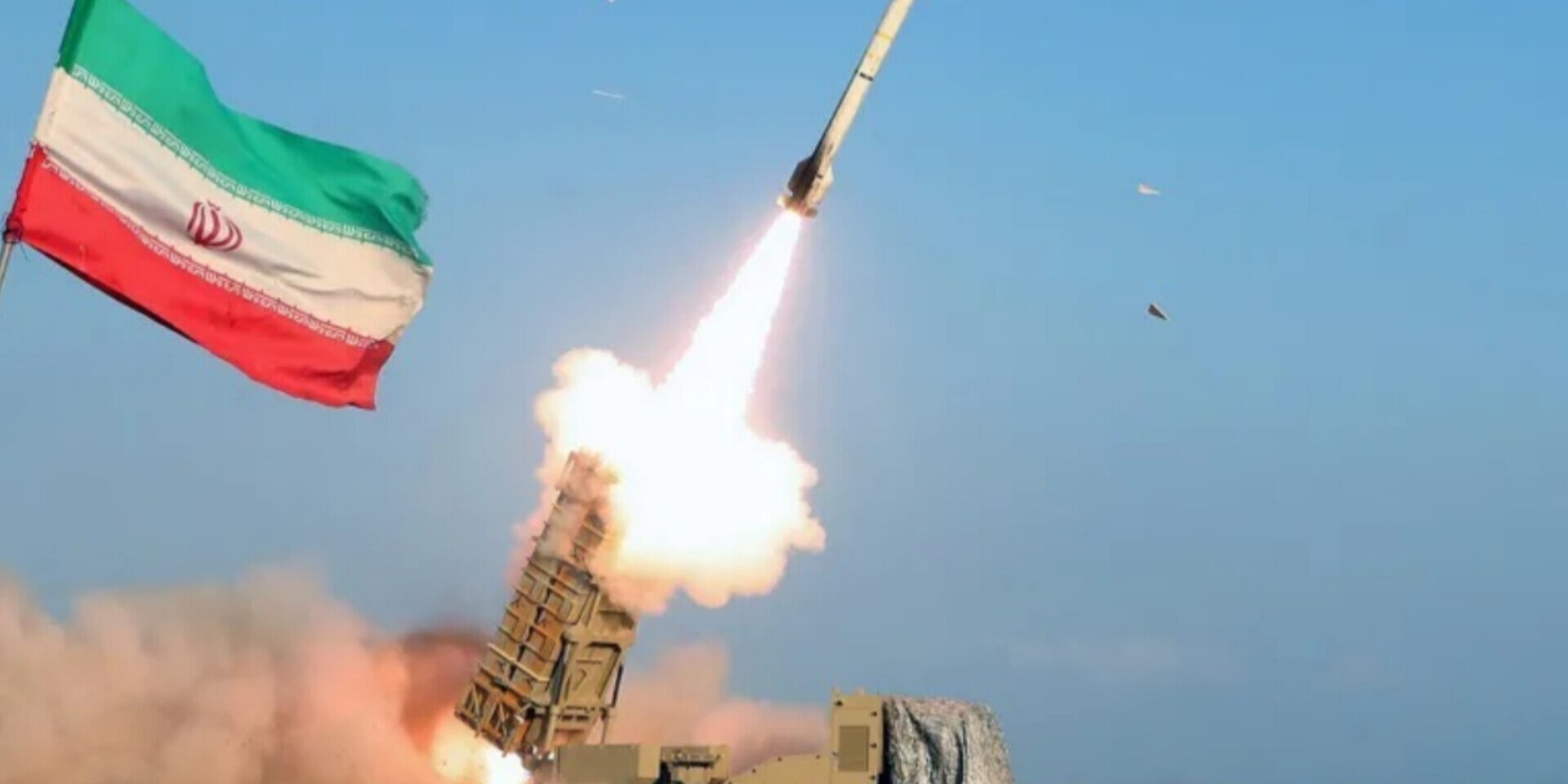
If we were to simplify the perspectives of elites and even the general public regarding “war and peace” and the reasons for their occurrence and continuation, we would likely see two distinct types of analysis:(1) Some believe that to achieve peace, the tools of war and aggression must be limited as much as possible. According to this analysis, the more we reduce weapons and the arenas of physical confrontation, the lower the probability of war, leading to peace.(2) The other group believes that, ironically, what causes and sustains peace is the possession of tools of war and the existence of “credible threats” from both sides. Based on this analysis, if we assume a conflict exists between two parties, the observation of weakness in one side will be a major reason for the start of a war. It is through this reality that many conflicts, wars, and the stability of various periods of peace can be explained; for instance, Iran’s lack of defensive and offensive tools at the beginning of the Islamic Revolution was the most significant reason for the start of the eight-year war.While one could argue for the existence of these two different analyses based on a personal and brief observation of the positions taken by elites and the public in the country’s current situation, the interesting point is that this subject is one of those vital questions that has existed throughout history and across diverse societies. In fact, the primary stances on this issue usually fall into one of these two categories.In 2017, the Nobel Peace Prize was awarded to a campaign whose goal was to encourage countries to join international treaties banning access to nuclear weapons. The followers and believers of the International Campaign to Abolish Nuclear Weapons [1] believe that to achieve peace, nuclear weapons must be limited, and essentially, “swords must be beaten into plowshares and spears into pruning hooks.”While such an analysis is common among a few elites and some of the general public in the West, let us look for the answer provided from a so-called scientific and rational perspective.Twelve years before the Nobel Peace Prize was given to those who believe in the first approach, the Nobel Prize in Economic Sciences was awarded to a specialist in game theory and mathematics whose analysis of war and peace was based on the second approach. Robert Aumann[2]—a name familiar to researchers in game theory, economics, and strategic studies—won this prize in 2005. Interestingly, he titled his Nobel prize lecture “War and Peace.”A study of this lecture and a review of the analytical implications based on game theory—found in that speech and many related articles—clearly illustrates “actual” and “scientific” policies in the field of strategic behavior and choices. The title of the prize awarded to him also clearly explains the subject to the audience: “Game Theory Analysis of Conflict and Cooperation[3].”In that lecture, based on standard game theory analysis, Aumann states that it was not the “peace-loving” nature of the United States or the Soviet Union that prevented a nuclear war between them; rather, it was the 24-hour flight of bombers every single day that prevented nuclear war. In the language of game theory, it was the existence of a “credible threat” or a “believable threat” that prevented the outbreak of nuclear war.At the beginning of his speech at the Royal Swedish Academy of Sciences, confronting the simplistic first approach to analyzing war and peace, Aumann declares that we must change the direction of our efforts to achieve peace and move the entire focus of war studies into a different analytical space.Aumann concludes his Nobel speech with a passage from t
he Torah, quoting the Prophet Isaiah regarding the time of the savior’s appearance: “He will judge between the nations and will settle disputes for many peoples. They will beat their swords into plowshares and their spears into pruning hooks. Nation will not take up sword against nation, nor will they train for war anymore.”After quoting this passage—and, of course, as a practicing Jew in his personal belief and life—Aumann explicitly states that following the recommendation of the Prophet Isaiah requires the existence of a single power or ruler. When a single, supreme, global, and eternal ruler does not exist, peace is conditional upon the presence of swords and spears. In Aumann’s words, nations must actually continue to “learn war” so that war does not occur.Perhaps the simplistic first approach and the awarding of the Nobel Peace Prize to nuclear disarmament campaigns represent the “stated” policy of certain authorities and institutions in the East and West. However, the scientific and rational second approach—and the awarding of the Nobel Prize in Economics to people like Aumann—aligns with the “actual” policies used in the process of decision-making and social, political, and economic choices across the globe.Our country, which for whatever reason faces a conflict of interests with others—a situation that is a natural and normal part of a free and competitive world—must recognize that it has traveled this path so far at a considerable cost and has succeeded in proving its ability to create “credible threats” to the world. For this reason, it should not deviate from the end of this path, which is based on “experience,” “reason,” and “science.” Currently, patriotic leaders and decision-makers must reflect on the future of this lasting peace and how to interact with rivals, partners, and other countries. May we let experience, reason, and science be our guides, far from simplicity or even ideological bias. May history record a dignified and wise narrative of the decisions and choices made today by the “People of Salman”—a people who would reach for “knowledge” (or “Power”), even if it were as far away as the Pleiades.
[1] ICAN
[2] Robert Aumann; Member of the Center for the Study of Rationality and the Department of Mathematics at the Hebrew University of Jerusalem at the time of receiving the Nobel Memorial Prize in Economic Sciences in 2005.
[3] Awarded for Game Theory Analysis of Conflict and Cooperation.